
📦Global Solidarity & Inclusive Communication
Global Solidarity & Inclusive Communication
Section outline
-
-
-
-
-
-
-
🌍 Three countries. One conversation.
Young people from Italy, Morocco and Georgia meet online for six weeks.
Their task?
Explore how young people experience unemployment and access to education — and find out whether their challenges are really as different as they seem.
Before you discover what happened, make a prediction:
Do you think the three groups will find more differences or more similarities?
-
Students mustMark as done
The participants chose to create one shared awareness video.
Rather than making everyone communicate in the same way, each group contributed its own perspective, language and local story, filming short segments on smartphones.
These individual contributions were then brought together around one shared message:
“Different countries, same dreams.”
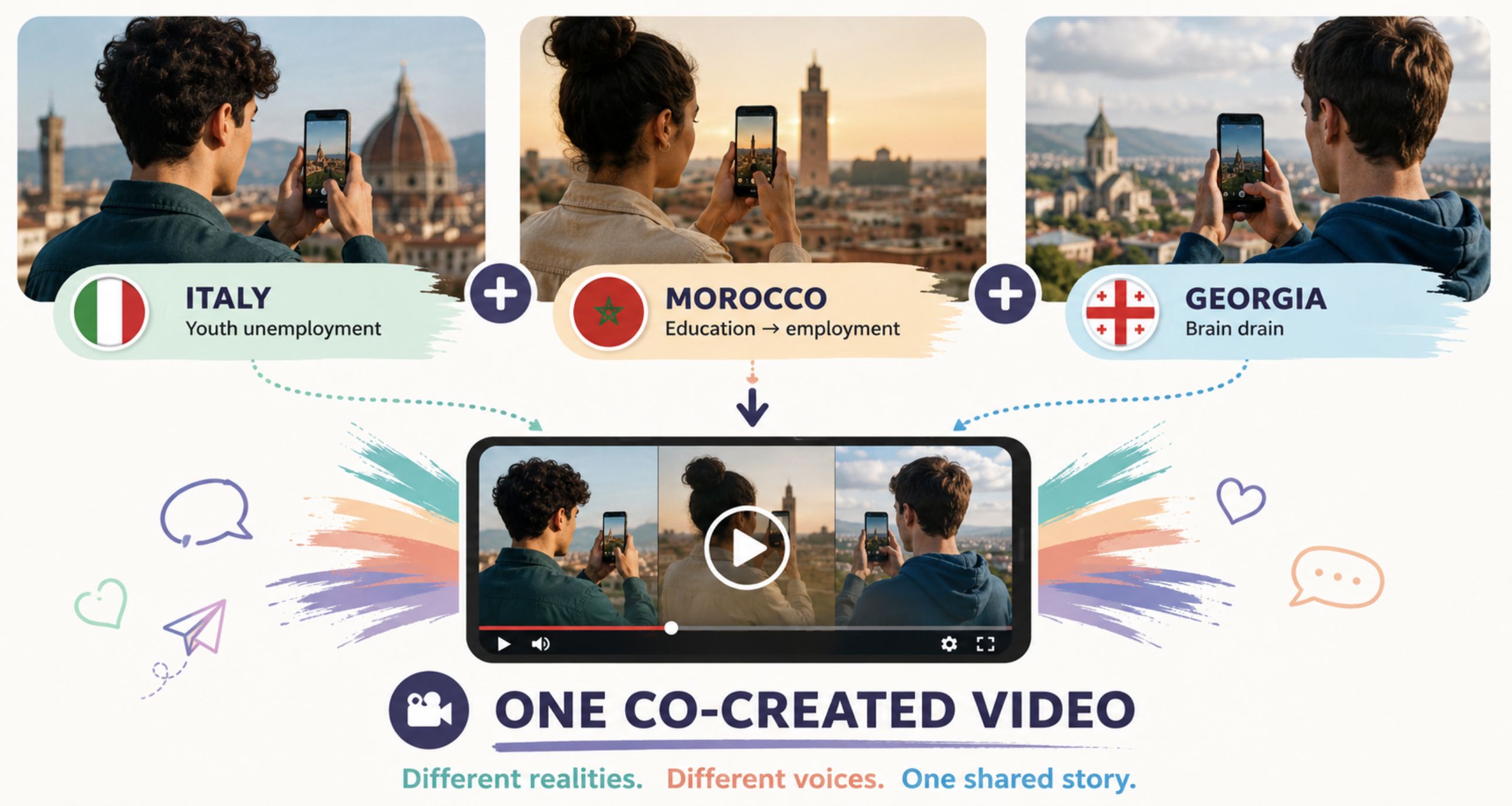
🌍 Three realities. One shared story.
The final video combined different languages, experiences and local realities without trying to make them identical.
Each group remained visible in the final product, while the combined stories revealed something larger: young people living in very different contexts could still share concerns, aspirations and uncertainty about their futures.
The video was shared through the SINFT platform and social media, taking the conversation beyond the original exchange participants.
💡 KEY INSIGHT
Co-creation does not mean speaking with one voice. It means creating space for different voices to contribute to one shared message.🔎 Look Closer
What made this a genuinely co-created product rather than simply three videos placed together?
As you think about your answer, consider:
Shared purpose — Were participants working toward a common goal?
Local voice — Could each group preserve its own perspective?
Shared ownership — Did participants contribute to the final product?
Connection — Did the combined story communicate something that the individual stories could not?
Keep these four ideas in mind. You will use them in the next activity.
-
-
-
-
-
-
Students mustMark as done
The same technology can serve very different purposes. Compare the three functions side by side and notice how the purpose, beneficiary, value and level of responsibility change.
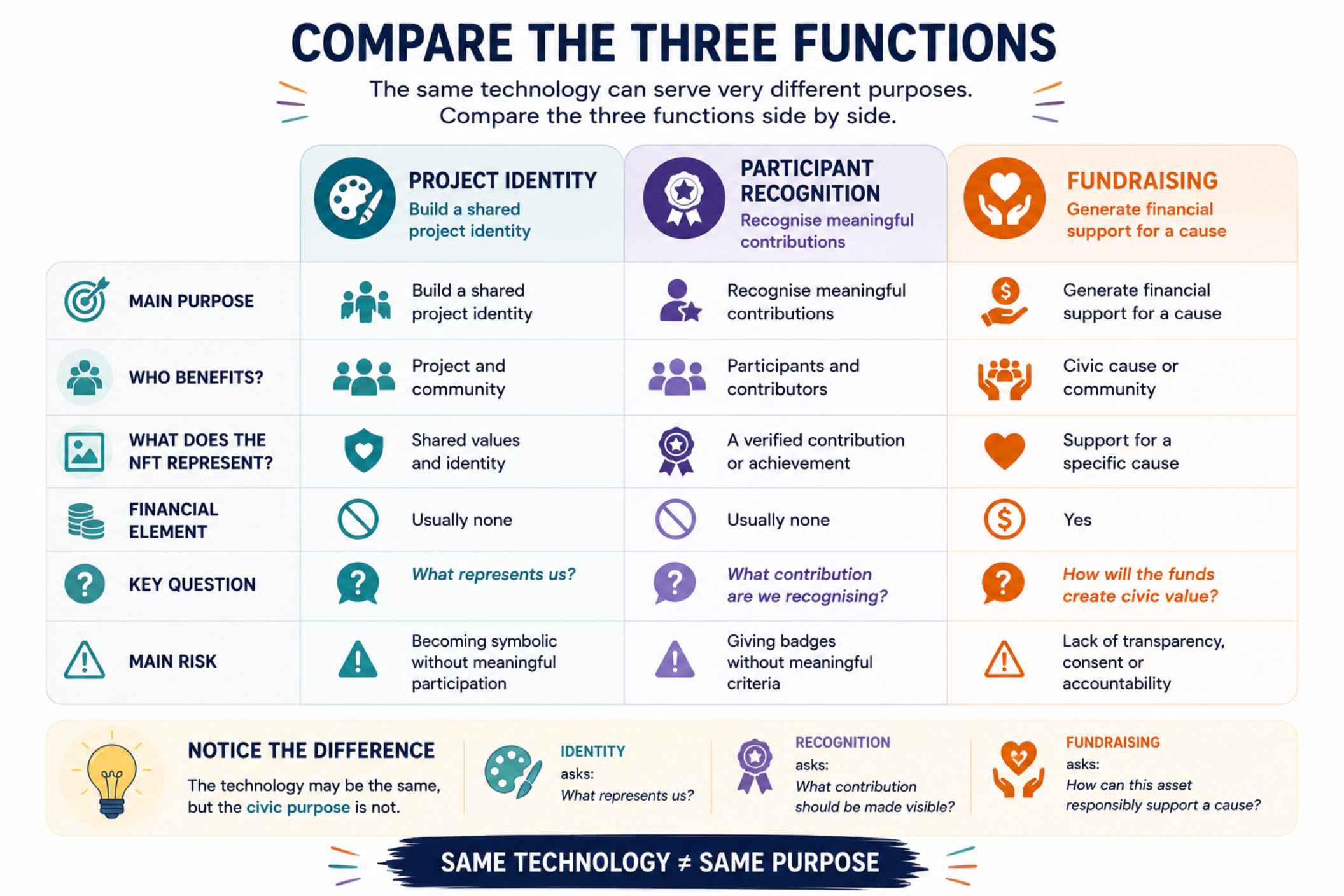
🔍 Before creating an NFT, ask four questions
1 — PURPOSE
What problem does it solve?
Does the NFT strengthen identity, recognise participation or support fundraising?
2 — PARTICIPATION
Who is involved in creating it?
Are young people genuinely co-creating the asset, or is it being designed for them?
3 — VALUE
What makes it meaningful?
Does it represent a real contribution, shared value or civic purpose?
4 — RESPONSIBILITY
What ethical implications should we consider?
Think about consent, ownership, accessibility, transparency, environmental impact and financial risk. If the team cannot answer these four questions clearly, it probably does not need an NFT.
💡 Key Takeaway
Technology follows purpose.
A civic NFT has value when it helps a project represent a shared identity, recognise meaningful contribution, or responsibly support a cause.
The strongest international projects do not use digital tools because they are fashionable. They choose them because they help people collaborate, participate and create civic value together. -
-
-
-
-

Shape the Future.
Mint the Change.