
Global Solidarity & Inclusive Communication
What is Civic Impact? From good intentions to measurable change
Here is an uncomfortable truth about youth civic projects: most of them feel meaningful to the people who run them — and many of them change very little for the people they aim to help.
This is not because the young people involved do not care. They usually care deeply. It is because good intentions and civic energy are not enough on their own. Without a clear theory of how your action connects to the change you want to see, you risk creating an activity that documents solidarity without producing it.
Civic impact is what happens in the world as a result of your action — not how you feel about having taken it. It is the difference between posting about inequality and changing the conditions that produce it. Between raising awareness and shifting behaviour. Between feeling solidarity and practising it.
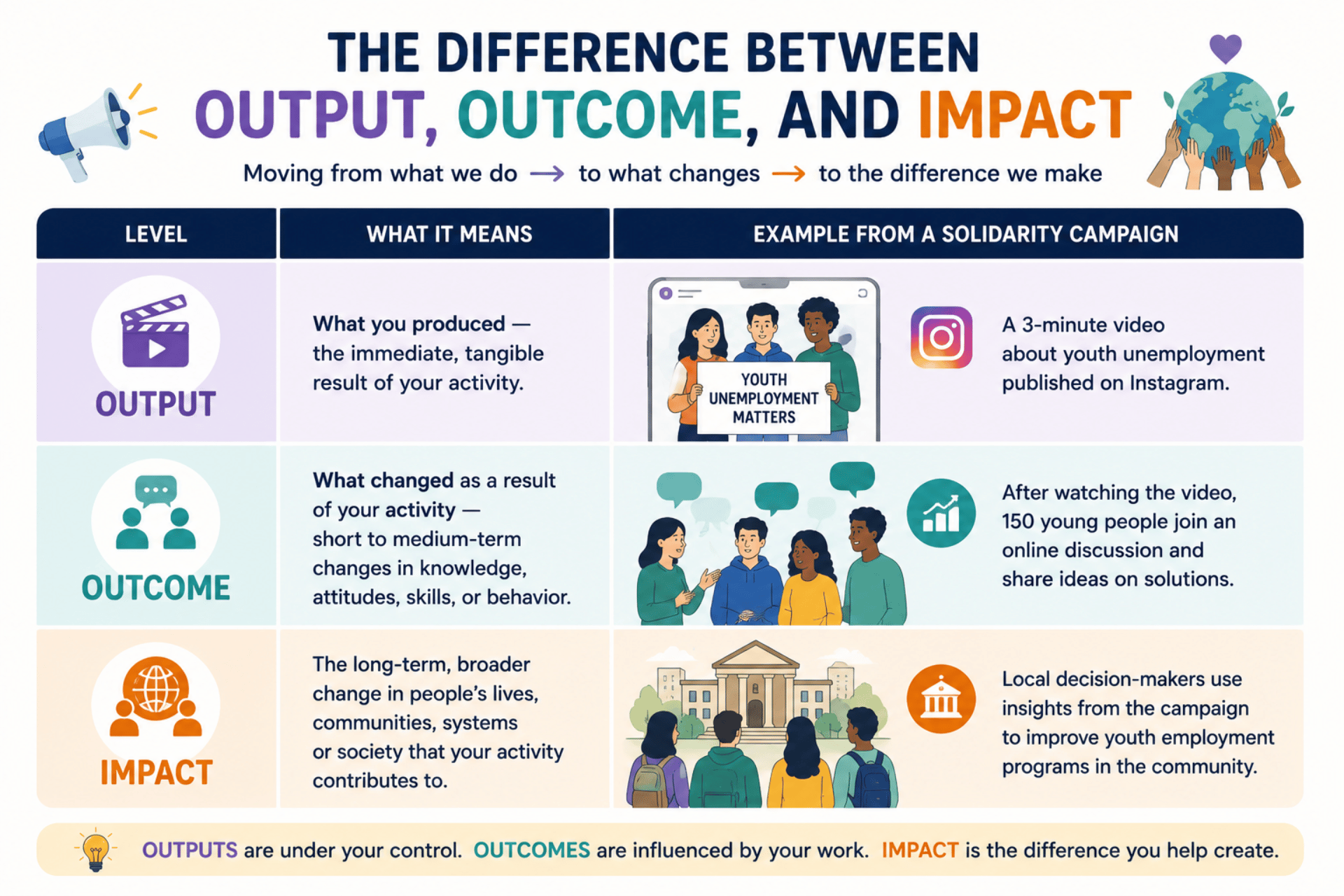
Most youth projects reliably produce outputs. Fewer produce measurable outcomes. Fewer still achieve traceable impact. This is normal - impact takes time, scale, and often the work of many actors, not just one project. But being honest about which level you are working at makes your project more credible, more useful, and easier to improve.
What is a Theory of Change?
A Theory of Change (ToC) is a map that explains how your action connects to the change you want. It answers the question: if we do X, we expect Y to happen, because of Z.
It does not need to be complicated. At its simplest, a Theory of Change for a youth civic project includes:
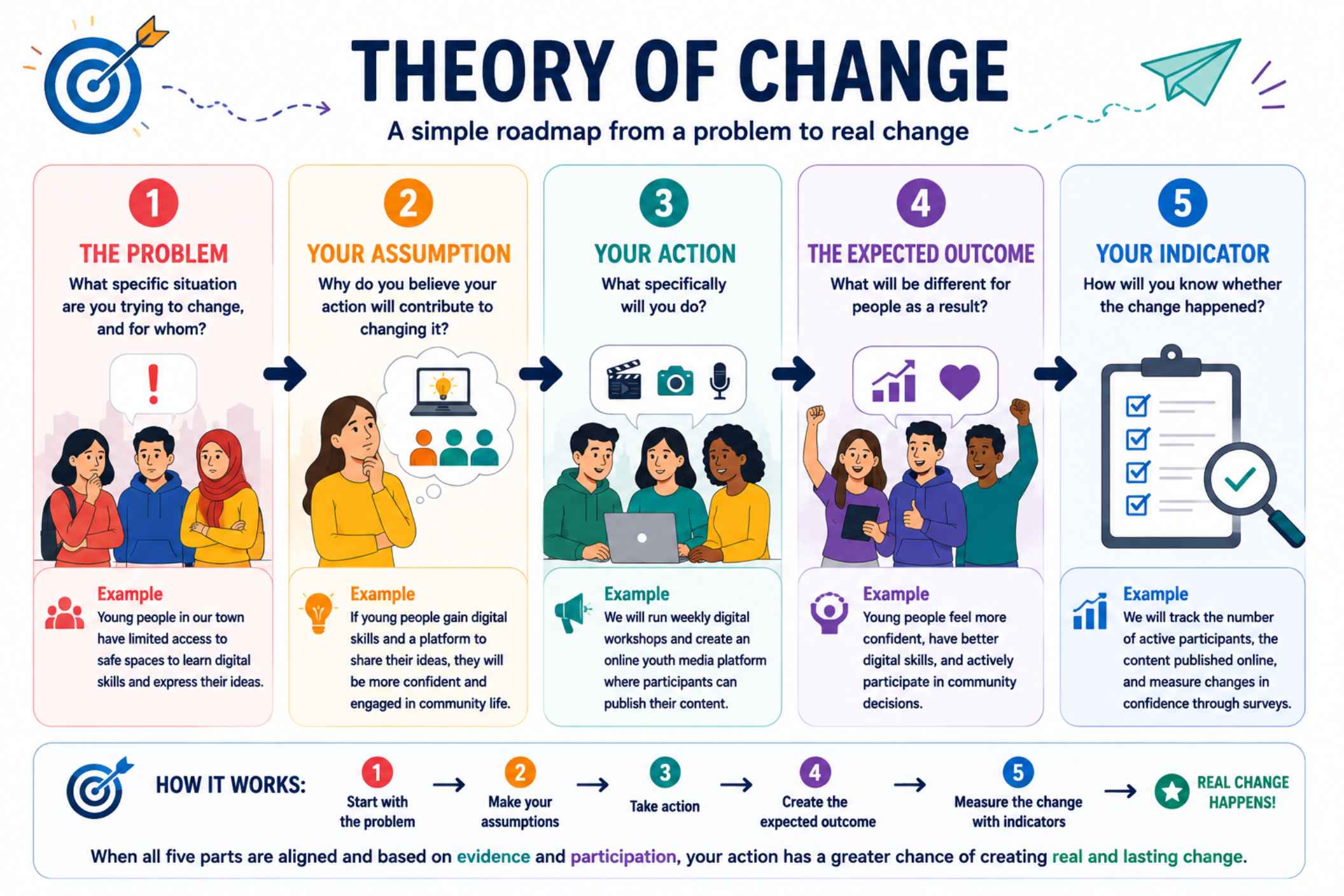
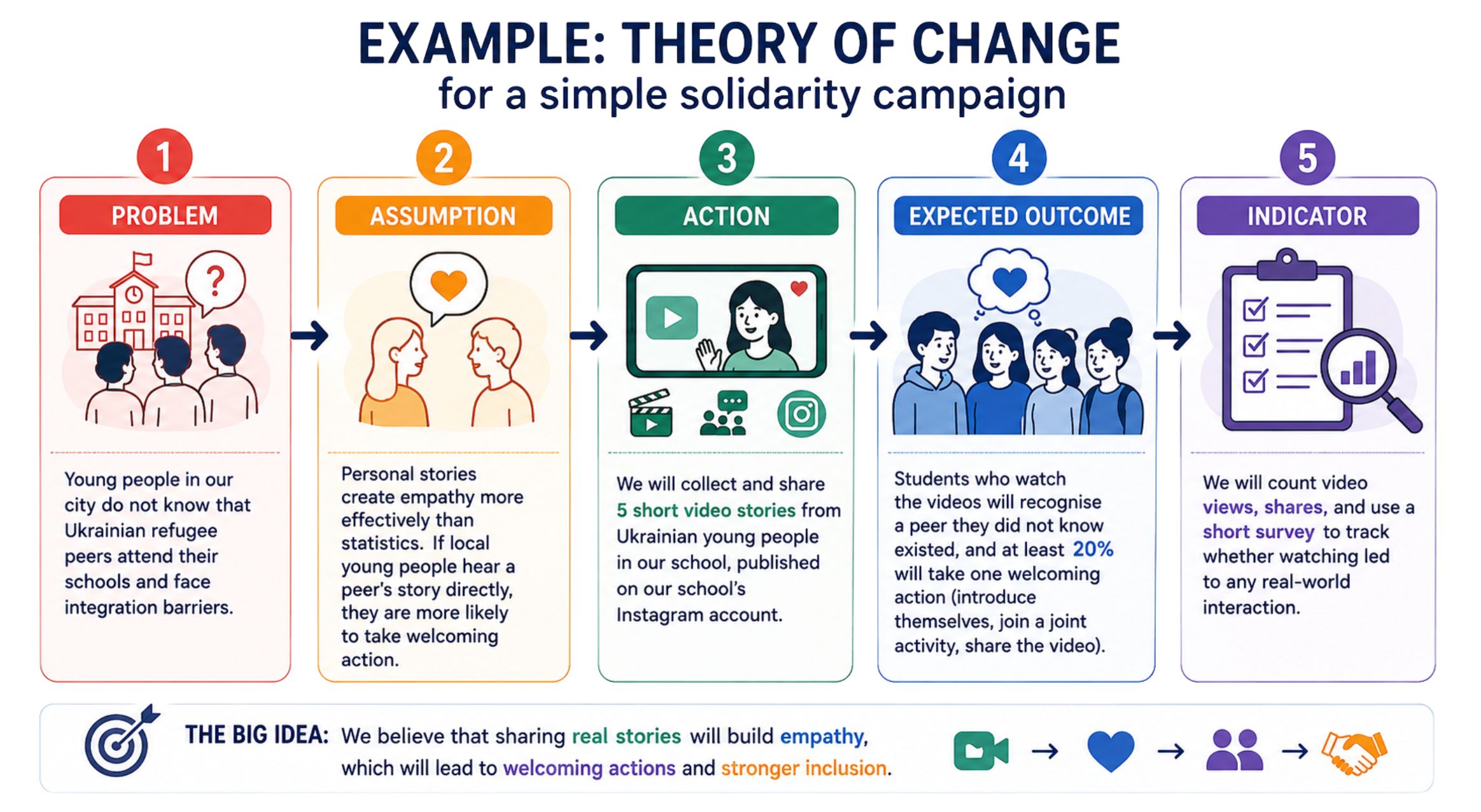
Notice that this Theory of Change is honest about its scale. It does not claim to solve integration. It claims to create empathy that leads to one specific kind of welcoming action. That modesty is a strength, not a weakness.

Shape the Future.
Mint the Change.