
Global Solidarity & Inclusive Communication
From Dialogue to Action: why co-develop?
Intercultural dialogue is valuable. But dialogue without action can stay comfortable and abstract. Co-development — the process of creating something together across cultural boundaries — is where solidarity becomes concrete.
Co-development means that all parties genuinely contribute to shaping the goal, the process, and the outcome. It is fundamentally different from outsourcing (one group makes decisions and another implements them) or consultation (one group collects input and then decides alone). In real co-development, power and authorship are shared.
This matters in international youth work for a specific reason: too often, organisations from wealthier countries or more established institutions design projects 'for' or 'about' young people from other contexts, without those young people having genuine influence on what gets created. Co-development disrupts this pattern — and produces better results, because the people closest to a challenge usually understand it best.
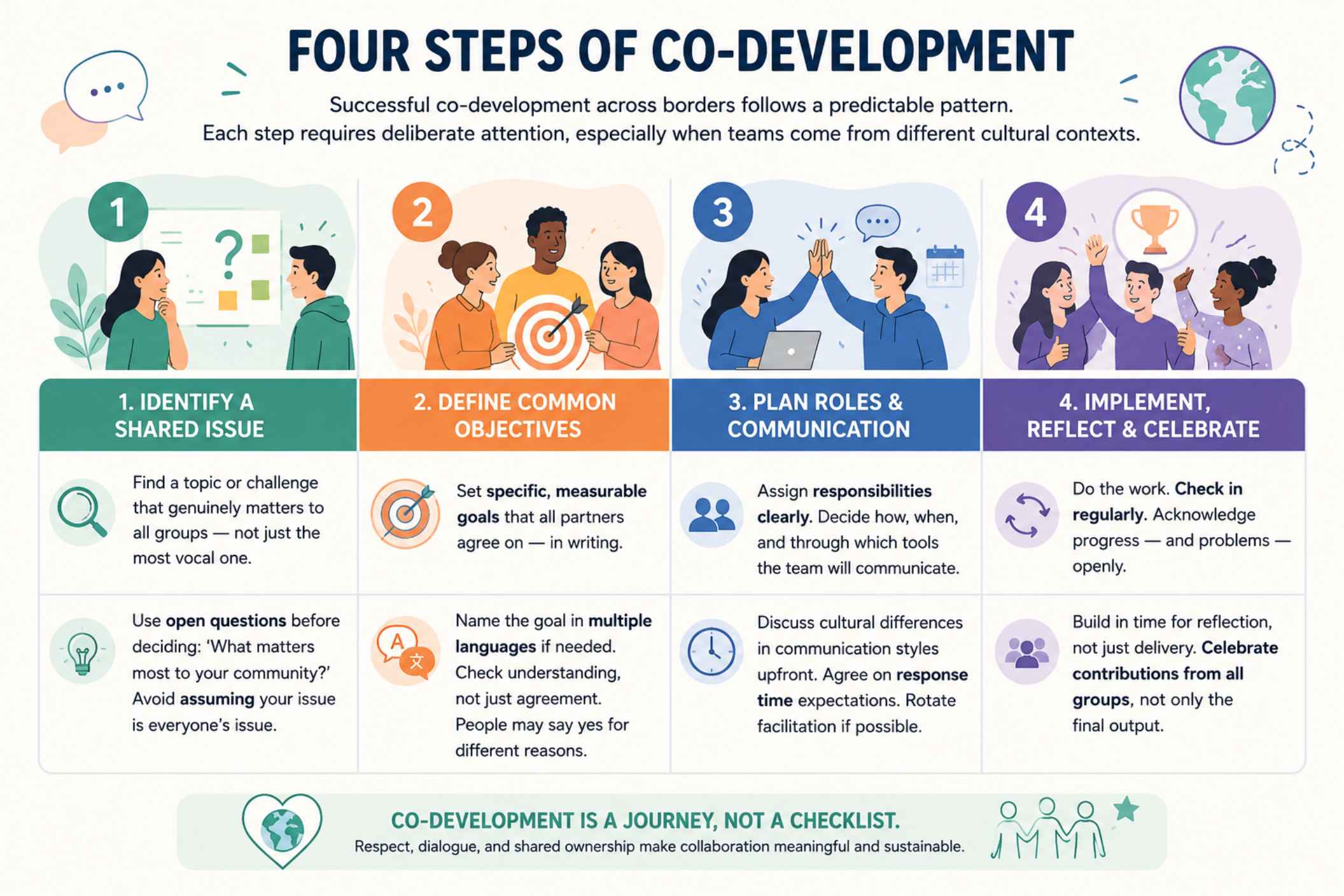
Four Steps of Co-development
Successful co-development across borders follows a predictable pattern. Each step requires deliberate attention, especially when teams come from different cultural contexts:
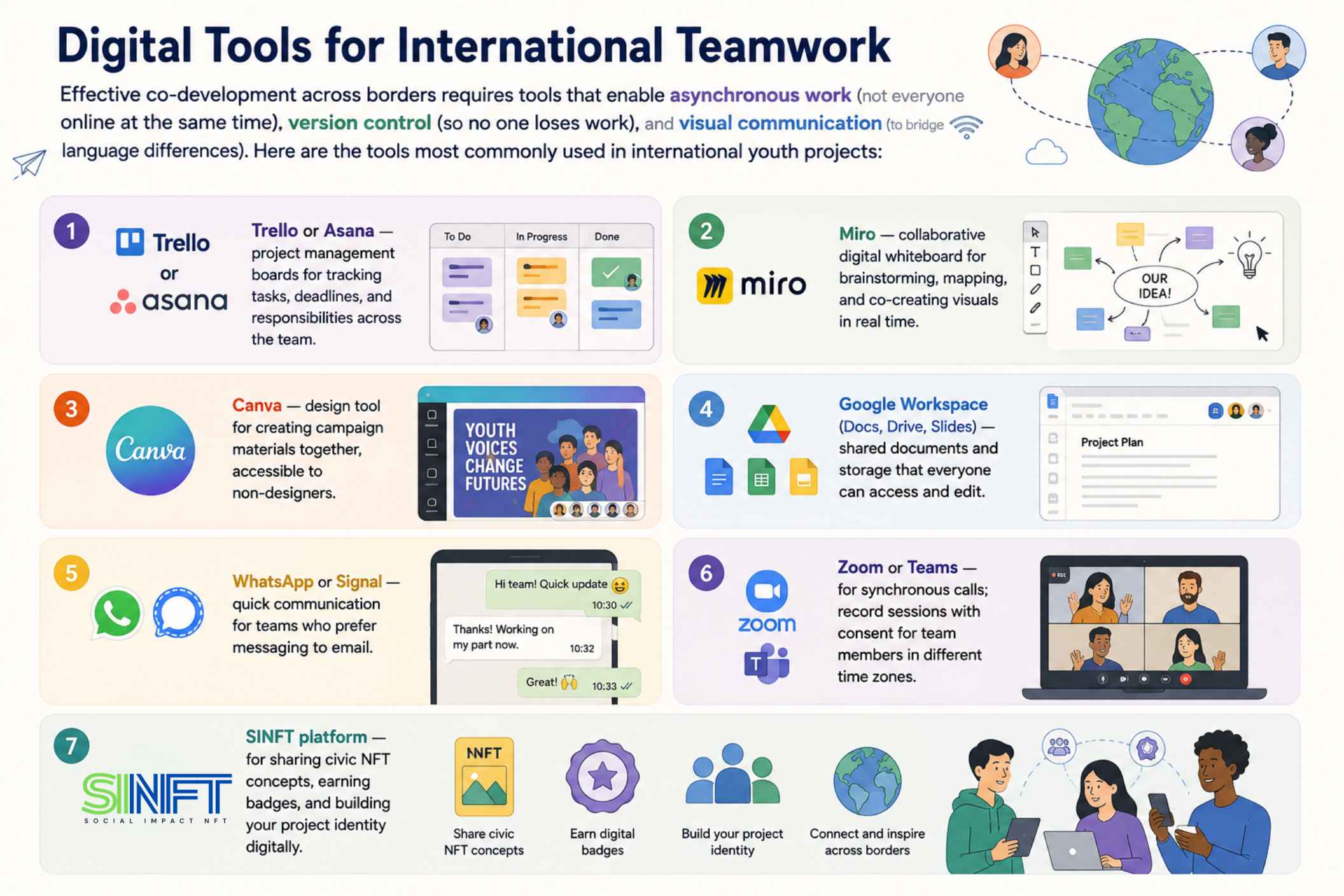
Digital tools for international teamwork

Shape the Future.
Mint the Change.