
Lesson 2 - Co-developing International Youth Projects
Global Solidarity & Inclusive Communication
Section outline
-
-
-
Students mustMark as done
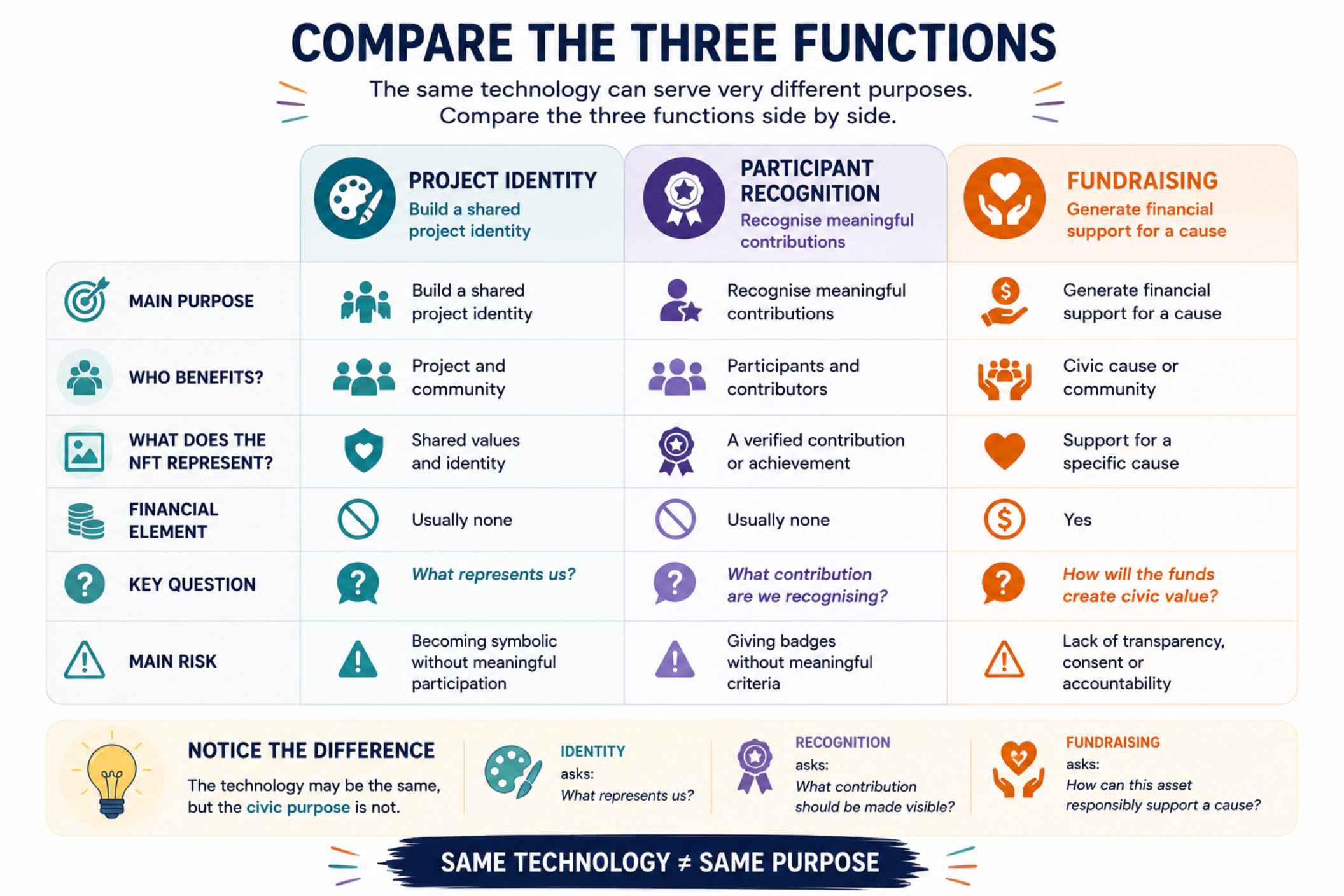
The same technology can serve very different purposes. Compare the three functions side by side and notice how the purpose, beneficiary, value and level of responsibility change.
🔍 Before creating an NFT, ask four questions
1 — PURPOSE
What problem does it solve?
Does the NFT strengthen identity, recognise participation or support fundraising?
2 — PARTICIPATION
Who is involved in creating it?
Are young people genuinely co-creating the asset, or is it being designed for them?
3 — VALUE
What makes it meaningful?
Does it represent a real contribution, shared value or civic purpose?
4 — RESPONSIBILITY
What ethical implications should we consider?
Think about consent, ownership, accessibility, transparency, environmental impact and financial risk. If the team cannot answer these four questions clearly, it probably does not need an NFT.
💡 Key Takeaway
Technology follows purpose.
A civic NFT has value when it helps a project represent a shared identity, recognise meaningful contribution, or responsibly support a cause.
The strongest international projects do not use digital tools because they are fashionable. They choose them because they help people collaborate, participate and create civic value together. -
-

Shape the Future.
Mint the Change.