
Lesson 1: Meet the AI: Introduction to Large Language Models (LLMs)
Digital Literacy & Online Safety
Section outline
-
Welcome to “Meet the AI” – Introduction to Large Language Models (LLMs)
Hello and welcome! This beginner-friendly lesson will gently introduce you to one of the most exciting technologies of our time: Large Language Models (LLMs) like ChatGPT, Gemini, Grok, and Claude.
Imagine an AI that has read millions of books, articles, and conversations — learning the patterns of human language so it can chat with you, answer questions, write stories, brainstorm ideas, translate languages, and help you create meaningful content. In this lesson, you will discover how LLMs actually work (at a simple, high-level view), explore their real-world applications in education, creativity, and social impact, and understand both their impressive strengths and important limitations.
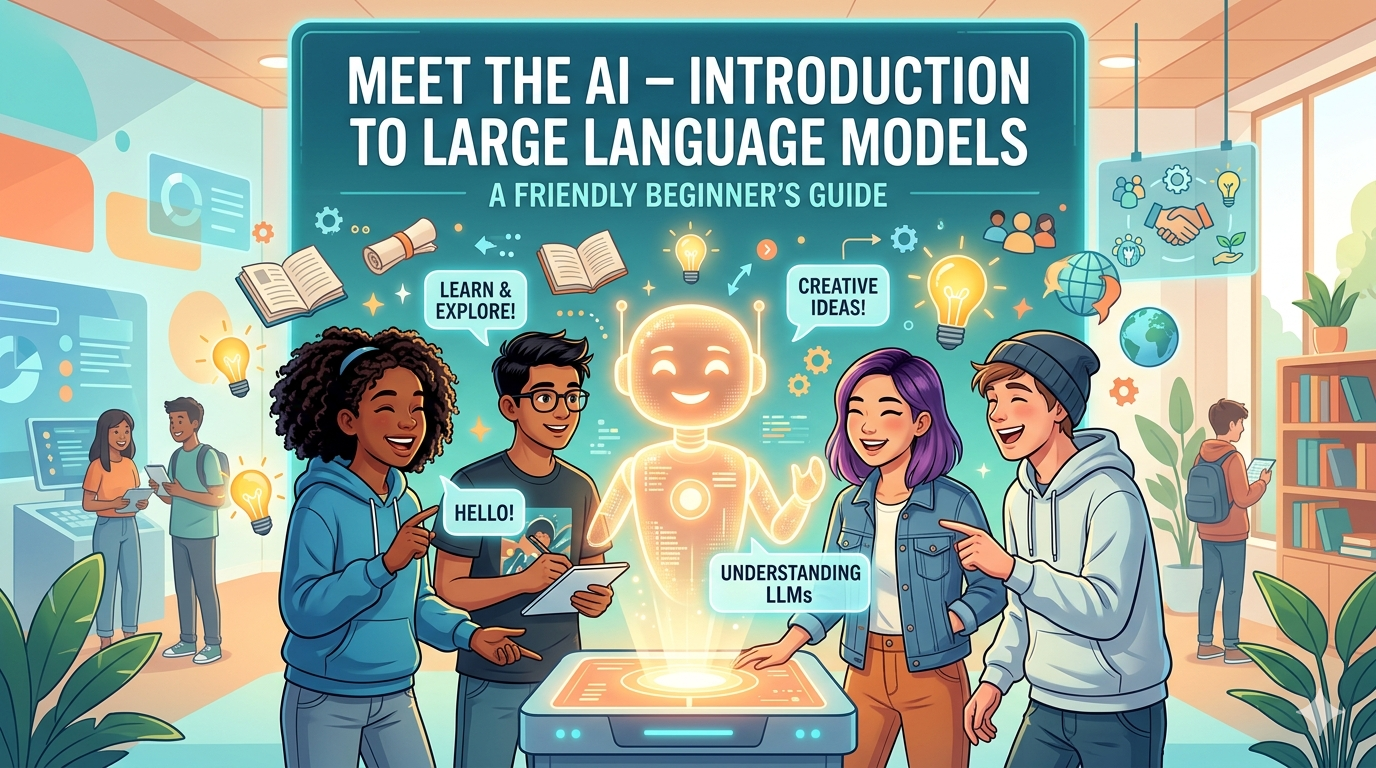
Most importantly, you will learn how to use these powerful tools responsibly and ethically — turning AI into a helpful creative partner for your projects, campaigns, and ideas that create positive change in your community.
By the end of this lesson, you will feel confident using LLMs for communication, planning, storytelling, and social good, while keeping critical thinking and human values at the center.
-
Students mustMark as done
Welcome to the exciting world of Artificial Intelligence! In this gentle introduction, we will explore Large Language Models (LLMs), powerful AI systems designed to understand and generate human-like text.
-
Students mustMark as done
Large Language Models (LLMs) are trained on massive collections of text data, such as books, websites, articles, and conversations, to learn the statistical patterns of human language.
-
Students mustMark as done
Large Language Models are already transforming the world for good. They power intelligent chatbots that provide 24/7 mental health support, answer questions in multiple languages, and assist students with learning difficulties.
-
Students mustMark as done
While Large Language Models (LLMs) are powerful tools for social good, they come with important ethical challenges. LLMs can produce bias inherited from their training data, generate hallucinations (confident but false information), and raise serious concerns about privacy, transparency, and intellectual property.
-

Shape the Future.
Mint the Change.