How to develop Advocacy campaigns which can support the social causes
Deep Dive Reading: The Multi-Channel Strategy & Marketplace Selection
Part 1: The Integrated Advocacy Framework
A successful campaign coordinator does not rely on a single channel. Instead, they engineer a ecosystem where Traditional Infrastructure and Digital Tools feed into each other.
-
Traditional Tools (The Anchors): Formal letters to ministries, press releases for national television, community town halls, and physically signed petitions. These tools build institutional legitimacy and ensure your local community (especially those who aren't tech-savvy) is included.
-
Web3 & Digital Tools (The Accelerators): Short-form video campaigns (TikTok/Reels), token-gated community channels (Discord/Telegram), and digital impact assets. These tools drive borderless funding, bypass local media censorship, and engage younger demographics globally.
The Synergy in Action:
Do not just sell an NFT. Use your social media campaign to explain the data behind the asset. For example, your Instagram video exposes the structural problem; your NFT collection funds the legal solution; and your traditional press release delivers the update to the local evening news.
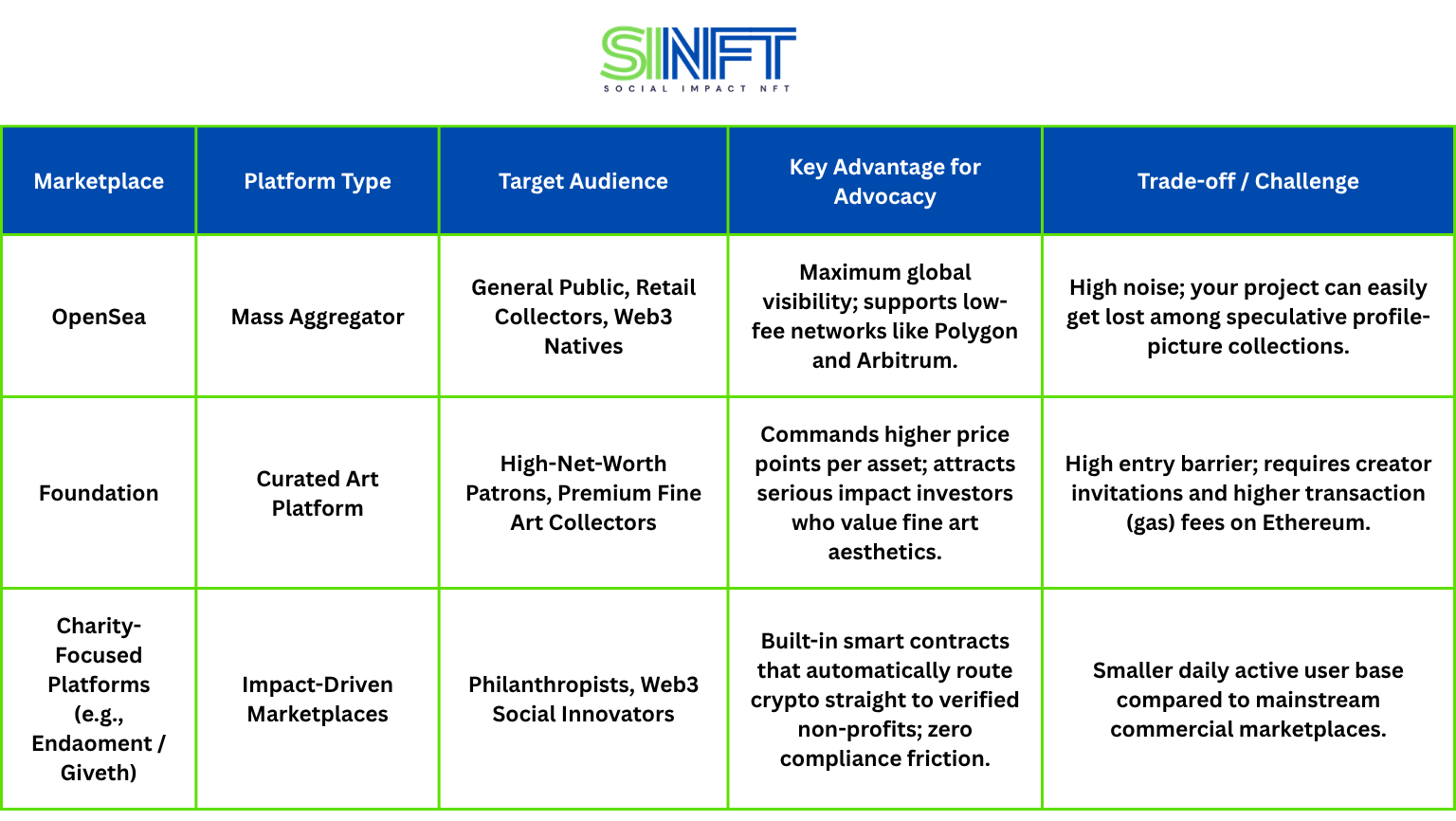
Part 3: Engineering the Campaign Timeline
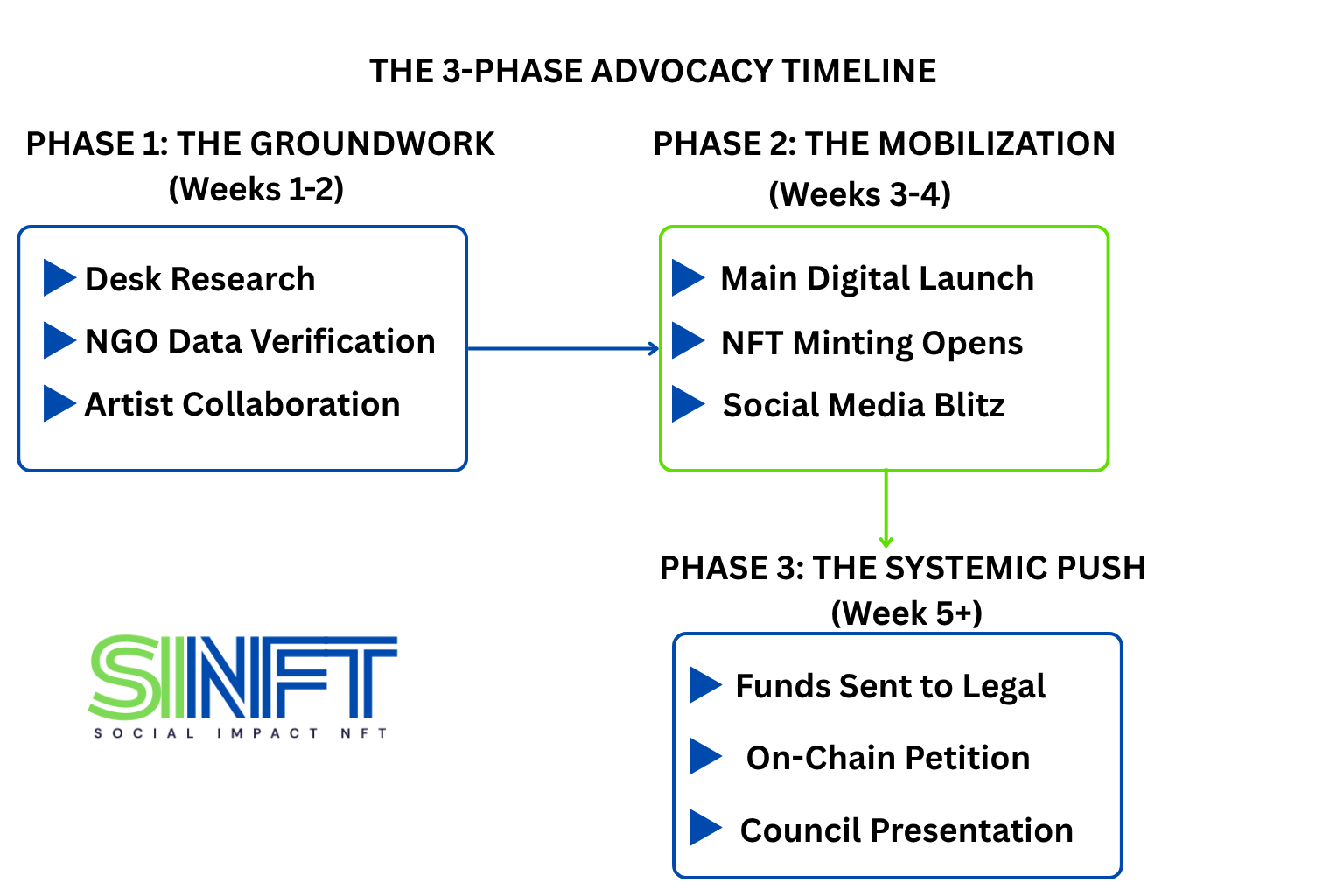
A multi-channel campaign runs in distinct phases. You cannot launch everything on day one.
-
Phase 1: The Groundwork (Building Legitimacy): Partner with your local NGO to lock down the verified data. Finalize your creative assets with the digital artist. Choose your deployment network based on your fundraising vs. volume needs.
-
Phase 2: The Mobilization (The Digital Blitz): Launch your video campaign across social channels. Open the NFT minting window. Route primary sales directly into the transparent community multi-sig wallet.
-
Phase 3: The Systemic Push (The Institutional Impact): Use the raised capital to execute your real-world strategy (e.g., hiring a legal team, funding field testing). Present the verifiable on-chain data and signatures directly to the targeted policymakers to demand a formal vote.
Shape the Future.
Mint the Change.