Lesson 1: Social Media Strategy & Visibility
Social Media Marketing, Community and EMAIL
Section outline
-
Lesson 1: Social Media Strategy & Visibility 📱
-
Students mustMake a choice
-
Students mustMake a choice
-
Students mustMark as done
Why is Social Media One of the Best Ways to Engage an Audience?
Social Media by the Numbers
"Now that you've all voted in the poll, let's look at the real data provided by DataReportal's Digital 2025 Global Overview Report. These numbers help us understand why social media is so powerful on a global scale.
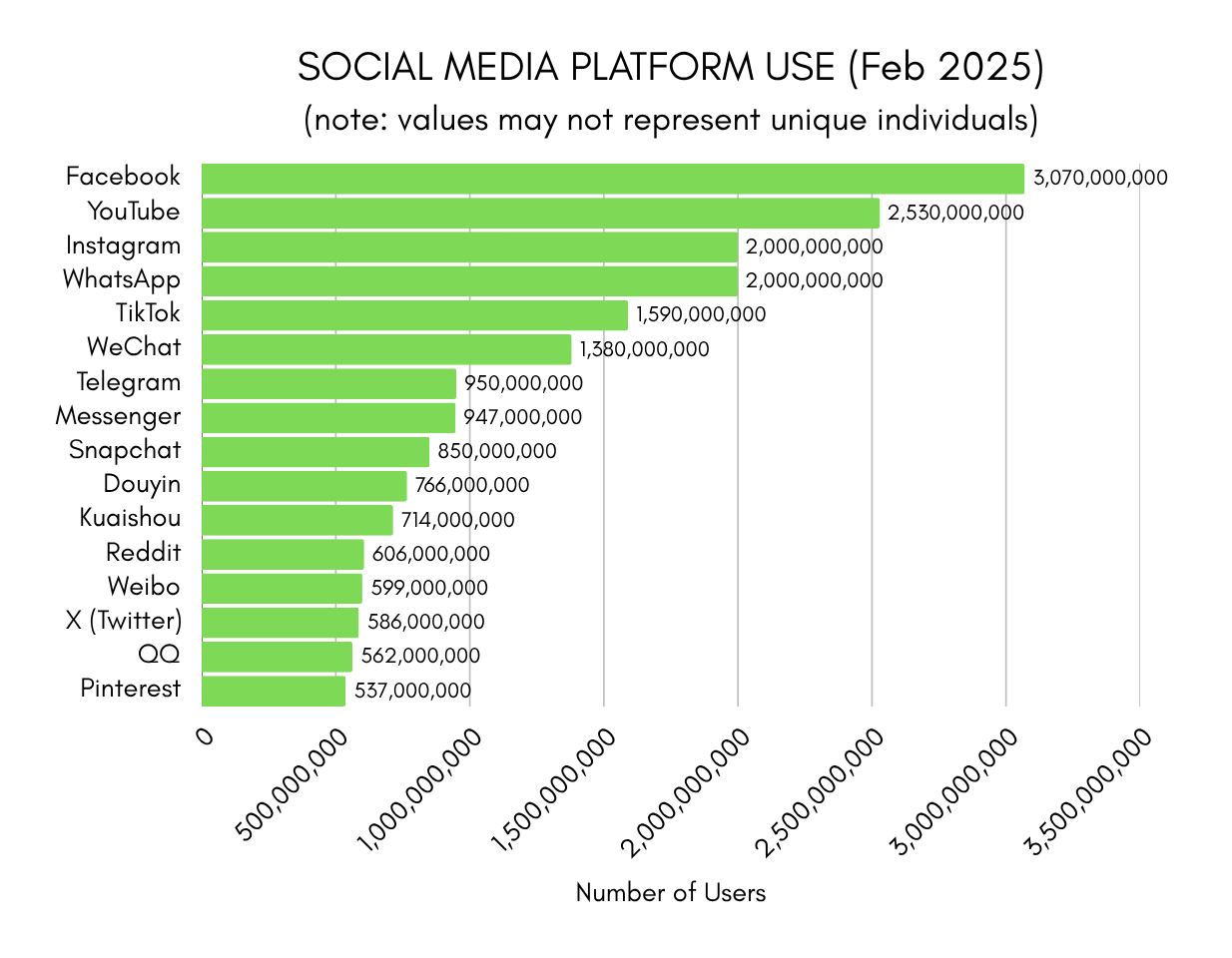
As you can see, the scale is massive. Facebook is still the largest 'digital nation' on Earth. But notice the mix: YouTube is right behind it, and platforms built on visuals (Instagram), messaging (WhatsApp, Telegram), and short video (TikTok) are all in the top tier. This data shows us that there isn't one 'social media' – there are many different worlds, each with billions of users.
This next chart is just as important. It shows the average time people are committing to social media every single day, broken down by age.
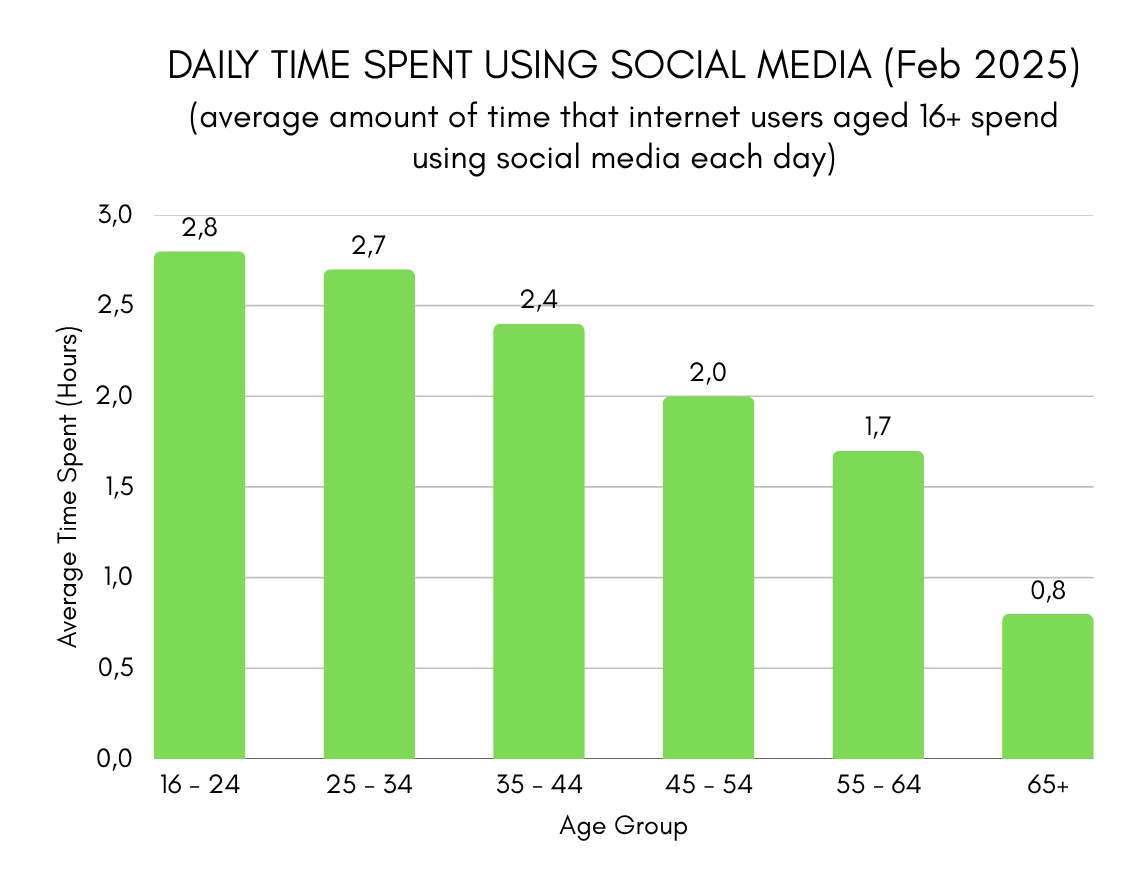
Look at the 16-34 age groups – they are spending well over 2.5 hours every day on these platforms. This isn't just a quick check; it's a huge part of their daily life. This tells us that if you can capture their attention, you have a deeply engaged audience, especially in these younger demographics.
In short, the data is clear: the audience is enormous, and they are deeply engaged for hours every day. This combination of massive reach and dedicated attention is precisely why social media is the most powerful environment to build a community and launch a social impact project today.
The Core Concept: Traditional Media vs. Social Media
We've seen the data on why people use social media – to connect, to be entertained, to discover. Now, we need to understand the single most important shift this causes for a project like yours. It's the fundamental difference between 'talking at an audience' and 'talking with a community'.
Now, let's look at two real case studies that successfully used the "Conversation" approach to build massive impact.
🌍OnChainMonkey
A historic NFT collection built on the motto
"Doing well and doing good."
They do not dictate charity goals top-down. Instead, they use X (Twitter) and Discord as open forums where the community takes the lead.
The founders regularly host live spaces asking: "Our treasury is growing. What global problem should we tackle next?"
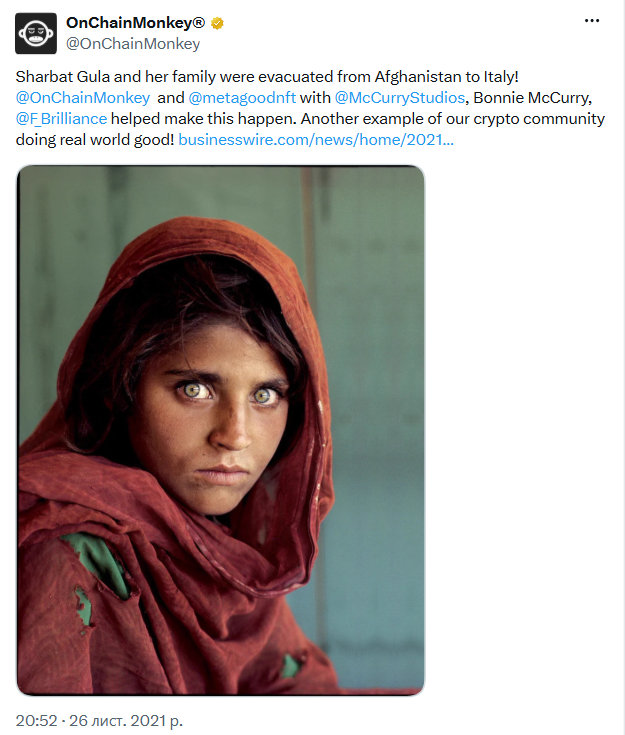
Because the community owned the conversation, they rapidly mobilized. Through social consensus, the community successfully proposed and funded real-world missions, including funding the evacuation of Sharbat Gula (the famous "Afghan Girl" from National Geographic) and rebuilding homes after natural disasters.
🐾Pawthereum
A Web3 project dedicated to supporting animal shelters worldwide.
Instead of posting generic "We donated!" graphics, they use their social platforms to shine a spotlight on the actual animal shelters.
Their content is designed to prompt replies and direct community action. A real post from their account looks like this:
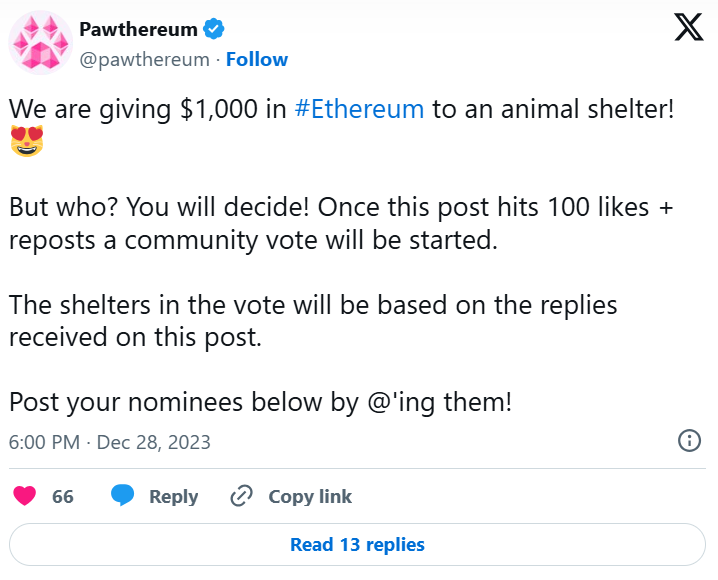
This strategy turns passive followers into active advocates for their local communities, creating viral engagement and high trust.
Successful social impact projects use social media to show proof, give credit to the community, and ask for their input. This is how you turn passive scrollers into passionate movement builders.
The 4 Key "Whys" for NFT & Social Impact
If you are launching an NFT project for a social cause, social media isn't just a marketing tool; it is the very foundation of your project. Here are the four reasons why:
- It Builds Your Community.
For many social impact NFTs, the primary "utility" (the benefit of holding the token) is the community itself. Social media platforms are the digital community halls where you gather true believers who are passionate about your specific mission. Without social media, your community has nowhere to exist. - It Provides Real-Time Transparency.
In the crypto world, skepticism is high. People want proof that their money is actually going to the cause. Social media allows you to provide radical transparency. You can post updates from the field, share links to blockchain transactions, and answer questions live. This builds the trust you need to succeed. - It Lets You Find Your Niche.
You don't need to convince all 4 billion internet users to buy your NFT. You only need to find the specific intersection of people who love digital art and care deeply about your specific cause (e.g., saving coral reefs). Social media algorithms and hashtags allow you to find and talk directly to those specific people. - It's Where Your Story Unfolds.
A social impact project is a journey, not a one-time product launch. Social media is the only place you can tell that story day by day. You can show the artist's initial sketches, document the struggles of building the project, and finally, celebrate the real-world impact together.
For an NFT & Social Impact project, social media is not a megaphone for broadcasting sales pitches. It is the foundation of your community, the proof of your transparency, and the stage for your story.
Now that we know why we must be on social media, we need a plan. In Part II, we will break down the key components of a Social Media Strategy, from defining your exact target audience to choosing the right platforms.
- It Builds Your Community.
-
Students mustMark as done
Key Components of a Social Media Promotion Strategy
Before you post your first update or record your first video, you need a strategy. A solid strategy answers four basic questions: Why are we doing this? (Goals), Who are we talking to? (Audience), What are we saying? (Content), and Where are we saying it? (Platform).
Goals: awareness, reputation, audience engagement, sales
Let's break down the first and most foundational component.
If you don't define your goal, you won't know if your strategy is actually working. In digital marketing, goals generally fall into four main pillars: Awareness, Reputation, Audience Engagement, and Sales.
However, for an NFT & Social Impact project, we must look at these pillars with a specific "Web3 twist":
1. Awareness
- The Goal: Getting people to know your project exists. You are trying to reach new eyes and expand your audience beyond your immediate circle of friends and existing supporters.
- What it looks like: A viral short-form video explaining the social problem you are solving, a widely shared infographic, or a shoutout/collaboration with a larger account.
2. Reputation — The Most Critical Goal
- The Goal: Making people believe your project is real, honest, and actually doing the work.
- What it looks like: Posting behind-the-scenes videos, introducing the real faces of your team, sharing on-chain transaction hashes of your donations, and publishing transparent roadmaps.
In the crypto space, scams are unfortunately common. For traditional businesses, "Sales" is often the only goal that matters. For you, Reputation is everything. If people know you exist (Awareness) but do not trust you, they will never support you.
3. Audience Engagement
- The Goal: Getting people to talk to you and to each other. This is the successful transition from a "Monologue" to a "Conversation."
- What it looks like: People answering your polls, asking thoughtful questions in the comments, joining your Telegram or Discord groups, and sharing their own stories related to your cause.
4. Sales (Action & Fundraising)
- The Goal: Getting people to take a definitive financial action, such as minting your NFT, buying your token, or making a direct donation to the cause.
- What it looks like: A clear "Call to Action" (CTA) post announcing that the mint is live, complete with official, safe links and a sense of urgency.
These four pillars are not isolated; they are an interconnected journey. Awareness brings people to your door, Reputation makes them trust you, Engagement invites them into your community, and Sales (Fundraising) is the natural result of doing the first three correctly. You cannot skip straight to asking for money without building the foundational trust and community first.
Defining the Target Audience
If you try to sell your NFT to "everyone", you will end up selling to no one. To be successful, you must divide the massive internet audience into smaller, specific groups. This is called segmentation.
When segmenting your audience for a Web3 project, you need to look at three main criteria:
1.Demographics: Who are they?
Age, income level, location. NFT Tie-in: Do they have the disposable income required to invest in digital assets?
2.Psychographics: What do they care about?
Values, hobbies, passions. NFT Tie-in: Do they appreciate digital art? Are they passionate about your specific social cause (e.g., planting trees, saving stray dogs)?
3.Web3 Experience: How much do they know about crypto?
NFT Tie-in: Do they already have a MetaMask wallet, or do you need to explain to them what a blockchain is?Creating Your "Ideal Holder Avatar"
Once you understand the criteria, you create an "Avatar". An avatar is a fictional character that represents your perfect community member. Instead of targeting a vague group like "Men 18-35," you create content specifically for "Alex."
For an NFT Social Impact project, you will usually need to build two distinct avatars. You must understand both, because they require completely different communication styles:
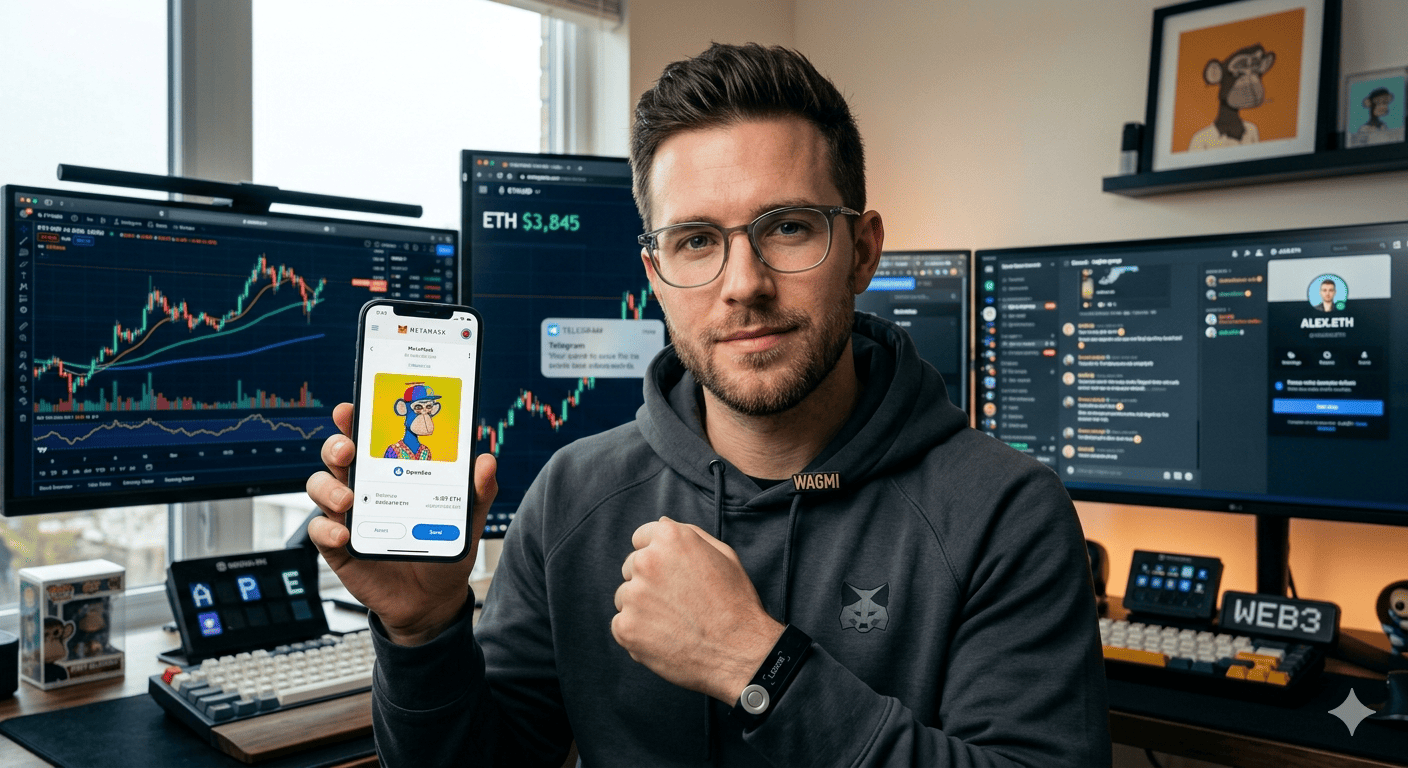

The "Crypto Native" (The Web3 Believer) The "Philanthropist" (The Traditional Supporter) Name & Age: Alex, 28 Sarah, 45 Background: Works in the tech industry. Highly digitally literate. Already owns a crypto wallet and actively trades NFTs on platforms like OpenSea. Donates regularly to traditional charities (like animal shelters or environmental funds). Loves art and community, but has never bought an NFT or used cryptocurrency. What They Care About: The quality and uniqueness of the art.
- The utility (what the NFT actually allows them to do).
- The strength and culture of the community.
- The project's future roadmap and tokenomics.
The real-world impact. They want to see exactly how their money helps the cause.
- Feeling an emotional connection to the mission and the people behind it.
- Trust and security.
How to Talk to Them: Speak their language. Focus your content on project transparency, smart contract details, and Web3 partnerships. You don't need to explain how to buy; you need to explain why your project is uniquely valuable. Avoid heavy crypto jargon (don't say "minting," say "buying digital art to support charity"). Tell emotional stories about your cause and, crucially, provide simple, step-by-step educational guides on how to safely buy their very first NFT using a credit card. The Golden Rule: A common mistake is treating these two avatars exactly the same. If you post a highly technical smart contract update on Instagram, "Sarah" will be confused and scroll past. If you post basic "how to use crypto" guides in a hardcore Telegram alpha group, "Alex" will be bored. Your strategy must tailor the message to the specific avatar you are trying to reach.
Types of content: What Are We Saying?
Now that you know who you are talking to, you need to decide what to say. A common mistake is using social media only to say "Buy my NFT." If every post is a sales pitch, people will unfollow you quickly.
To keep your audience engaged, you need a healthy mix of four content types. A great guideline is the 40/30/20/10 Rule:
1.Informational & Trust-Building (40% of your content)
Content that proves your project is real, active, and making an impact. It builds your Reputation. This includes behind-the-scenes updates, short raw videos, and proof of donations.
Let's break down a masterclass example from Women Rise NFT. This project focuses on funding girls' education globally. Instead of just posting their colorful NFT avatars, they use Instagram Reels to prove their real-world legitimacy.
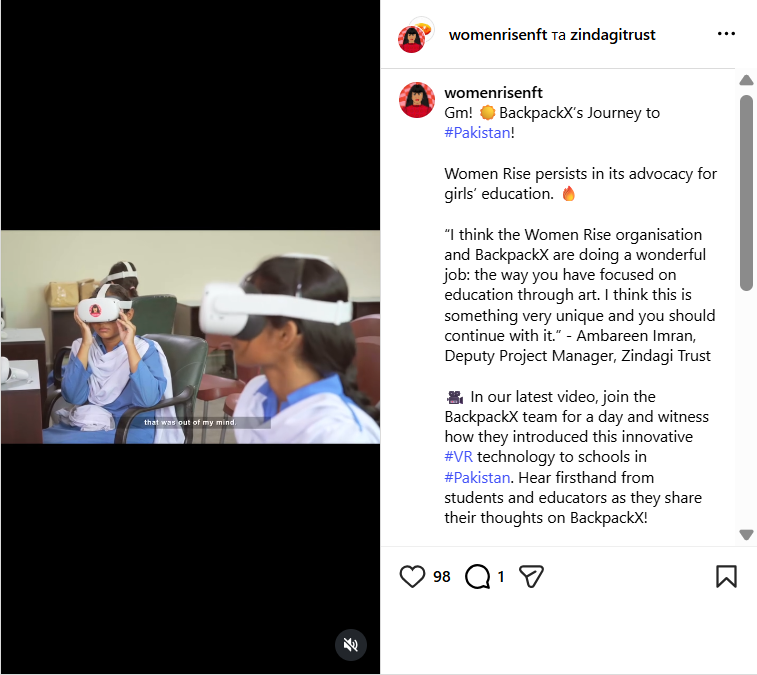
Why this is a perfect strategy:
1.Proof of Work (Show, Don't Tell): Instead of just typing "we donate to education," they visually prove it. They show the exact school, the exact technology they provided (VR headsets), and the actual girls benefiting from the Web3 funding.
2.Humanizing the Impact: Featuring authentic interviews with students (like Haniya) and local staff gives a human voice to the cause. It proves this is a real-world operation, instantly destroying the "crypto scam" stereotype and building deep trust with traditional donors.
3.Algorithmic Reach: Instagram pushes Reels to non-followers aggressively. This format is perfect for reaching "Sarah" (The Philanthropist) who might not actively search for NFTs, but will stop scrolling to watch an inspiring, well-produced documentary short about empowering young girls.
2.Educational (30% of your content)
Content that provides pure value to your audience by teaching them something new about your cause or about Web3. This establishes your project as a helpful authority.
Let's look at a masterclass in educational content from Replant World. They use the highly engaging "Instagram Carousel" format (swiping through multiple images) to teach traditional philanthropists about Web3 without overwhelming them.
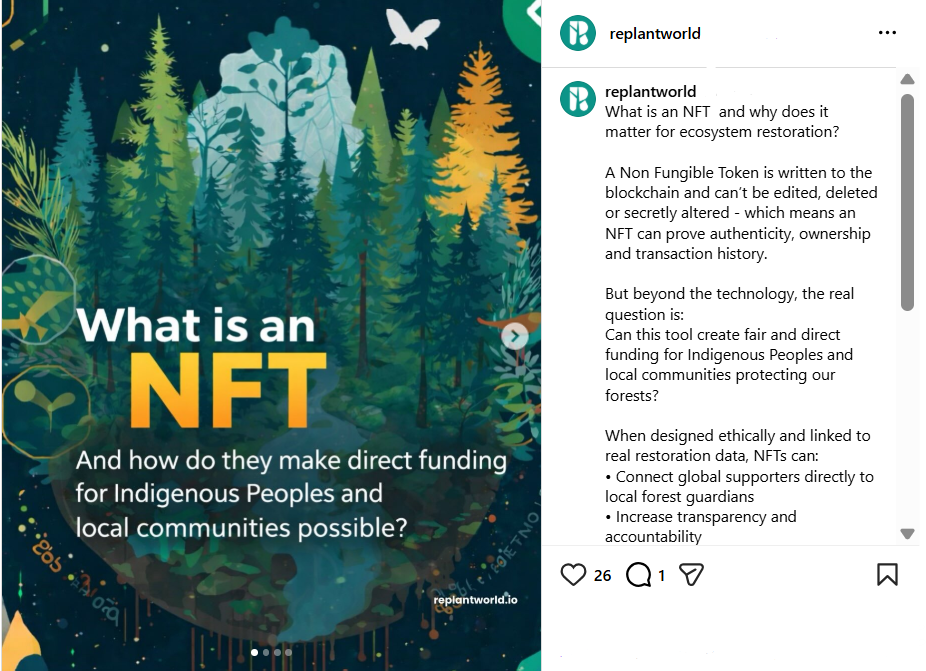
Why this is a perfect strategy:
1.Demystifies Web3 (For "Sarah"): It doesn't use confusing crypto slang like "smart contracts" or "nodes." It translates "blockchain" directly into benefits traditional donors care about deeply: total transparency and removing middlemen from charity.
2.Connects Tech to Tangible Good: By placing the definition of an NFT right next to a physical photo of a growing tree in the dirt, it visually bridges the gap between digital tokens and real-world environmental impact.
3.Highly Savable Format: Step-by-step carousels are among the most "saved" and "shared" content formats on Instagram. When followers save this to reference later, the algorithm pushes the post to even more people, generating free organic visibility.
3.Interactive (20% of your content)
Content explicitly designed to get replies, submissions, and build community. This includes polls, Q&A sessions, and User-Generated Content (UGC) campaigns (crowdsourcing).
Let's look at a highly emotional and powerful interactive post from Mom, I see war. Rather than just asking for a comment, they invite their audience to become co-creators of the project itself.
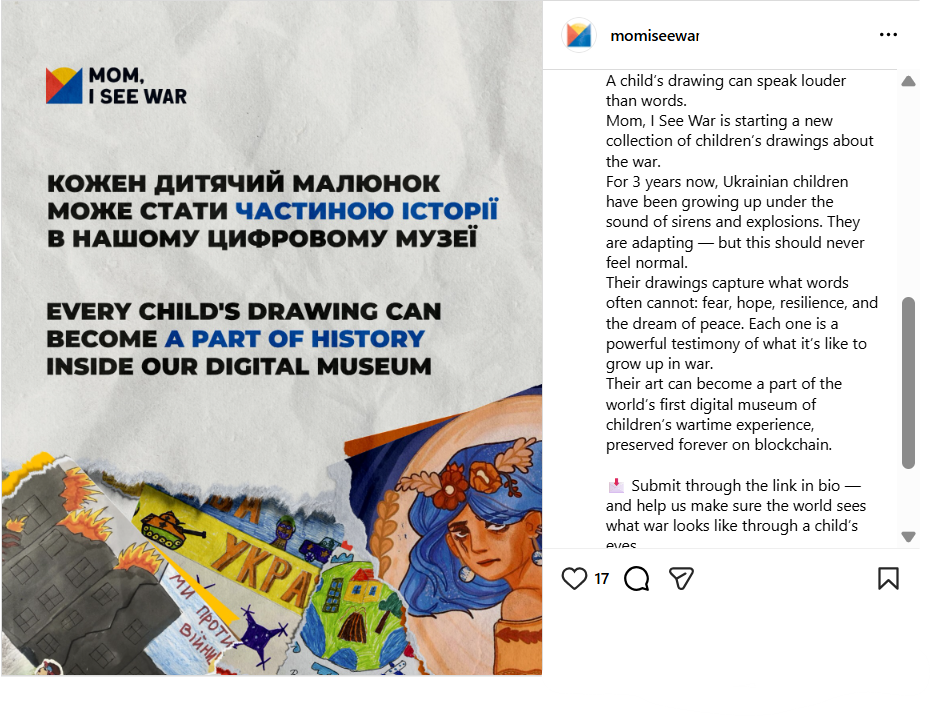
Why this is a perfect strategy:
1.Meaningful Participation (Crowdsourcing): This is the highest form of interactive content. They aren't just asking a simple poll question; they are asking their community to actively build the digital museum with them. This creates deep, emotional investment in the project's success.
2.Explaining Web3 Utility Naturally: They explain exactly why this is an NFT project without using confusing tech jargon. They highlight the core utility of blockchain: "preserved forever." It frames the technology as a tool for unerasable historical memory.
3.Clear Call to Action: The post provides a clear, actionable next step ("Submit through the link in bio"), smoothly moving people from passive scrollers on Instagram to active contributors on their platform.
4.Promotional (10% of your content)
The direct "Call to Action" (Sales/Fundraising). This is where you actually ask your audience to spend money, mint an NFT, or donate. It should only happen after you have provided value through the other three types of content.
Let's look at a highly effective fundraising post from Chatrity partnering with SOSD Singapore (a local dog shelter) on Facebook. This post perfectly balances emotional appeal with a direct sales push.
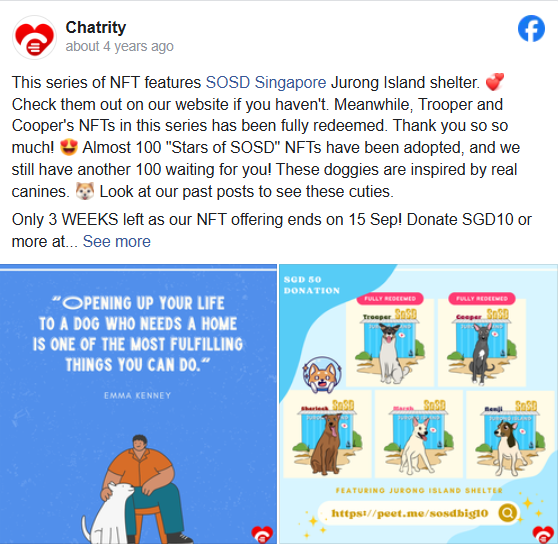
Why this is a perfect strategy:
1.Urgency & Scarcity (FOMO): By explicitly stating there are "Only 3 WEEKS left" and showing that specific NFTs (like 'Trooper' and 'Cooper') are already "FULLY REDEEMED," they create a strong psychological trigger. People act faster when they feel they might miss out.
2.Crystal Clear CTA (Call to Action): They don't just say "support us." They give an exact minimum price ("Donate SGD10 or more"), a clear deadline, and a direct link.
3.Tangible Connection: They remind the audience that "These doggies are inspired by real canines" at the Jurong Island shelter, grounding the digital NFT in physical reality and emotion.
4.Practical Benefits (For "Sarah"): For the Philanthropist audience, they include a crucial practical detail: "Donations made are TDR eligible" (tax-deductible). This removes a massive barrier for larger traditional donors.
The Takeaway: If you give value 80% of the time (Informational videos, Educational carousels, Interactive crowdsourcing), you earn the right to ask for support the other 20% of the time (Promotional mint posts).
Choosing the Right Platform for Promotion (Where Are We Saying It?)
A very common mistake for new projects is "Platform Burnout" – trying to be active on Instagram, TikTok, Facebook, X (Twitter), Discord, and Telegram all at the exact same time. If you have a small team (or if you are working alone), you will quickly burn out, and all your profiles will look average.
It is much better to be excellent on ONE platform than to be mediocre on five.
How do you pick your platforms? You base it on two things: Your Target Avatar (where do they live online?) and Your Content Type (what are you best at creating?).
Let's do a deep dive into the three major mainstream platforms and how they specifically fit into a Web3 Social Impact strategy:
Instagram Facebook TikTok "Visual Portfolio" & Trust Builder "Local Community" & Traditional Donor Hub "Viral Engine" & Movement Starter Audience Highly visual. Dominated by Millennials and Gen Z, but widely used by Gen X. It is the perfect home for Avatar 2: The Philanthropist. Skews older (Gen X, Boomers), which includes people who typically have the highest disposable income for traditional philanthropic donations. It is heavily focused on community groups and friends/family networks. Heavily Gen Z and young Millennials. They value authenticity, humor, and raw emotion over polished, "corporate" videos.
Best Formats 1.Carousels: Step-by-step guides to educate non-crypto users gently.
2.Reels: Short, emotional videos of your impact to capture new audiences (the algorithm pushes Reels to non-followers).
3.Stories: Daily, unpolished, behind-the-scenes updates to build a deep, personal connection with your existing followers.
Longer written posts with photos, links to detailed articles/fundraisers, and active community Groups. Vertical short-form video only. It must be fast-paced, use trending audio, or tell a highly engaging story in the first 3 seconds to stop the scroll.
Why pick it If your project relies heavily on visual art, stunning photography from the field, or emotional storytelling, Instagram is your best choice. Traditional donors and brand partners will often check your Instagram first to see if you look professional before deciding to support you. If your social impact is local (e.g., cleaning up a specific river in your city, funding a local animal shelter), Facebook is unmatched. You can join local community groups to spread the word. Furthermore, the Facebook audience is much more willing to stop, read a long, emotional text-based story, and click a direct donation link than users on fast-paced apps like TikTok. TikTok is the best platform in the world for Awareness. Its algorithm shows your content to people who do not follow you (the "For You Page"). If you need to raise massive global awareness for a lesser-known cause, and you are comfortable speaking directly to a camera or showing the "messy, raw" reality of your impact work, TikTok can help your mission go viral overnight. A Quick Note on X (Twitter): You might hear that X is the "Town Square" for the crypto world. While this is true for hardcore traders, it is incredibly noisy and very difficult for new social impact projects to grow there organically. Unless you already have a massive Web3 network, we highly recommend focusing your main efforts on Instagram, TikTok, or Facebook. These platforms are much better suited for reaching traditional philanthropists and building a genuine, supportive community around your cause first.
How to Make Your Choice: The "Hub and Spoke" Strategy
Instead of picking just one or trying to do all of them, successful projects use the Hub and Spoke method:
1.Choose Your Hub (80% of your effort):
Where does your primary Avatar spend their time? For most social impact projects, your Hub will be Instagram (for visual impact) or Facebook (for local/older donors). You create all your original, best content for this platform.
2.Choose 1-2 Spokes (20% of your effort):
These are secondary platforms where you simply repurpose content. If your Hub is Instagram, you can automatically post your Instagram Reels to TikTok (Spoke 1) and cross-post your images to Facebook (Spoke 2) with minimal extra effort.
The Decision Checklist
Before launching your accounts, ask yourself these two simple questions:
1.Who am I talking to mostly? (If General Donors/Art Lovers → Instagram/Facebook. If Young Activists → TikTok).
2.What am I actually good at making? (If writing long stories → Facebook. If photography/design → Instagram. If video editing/speaking → TikTok).Creating a content plan
What to keep in mind?
Now that you know who you are talking to, what to make, and where to post it, you need to organize this into a realistic schedule. A content plan prevents you from waking up every day wondering what to post. When building your plan, keep these crucial elements in mind.
First, prioritize consistency over frequency. It is much better to post three times a week for a full year than to post multiple times a day for a month and then disappear. In the Web3 space, a sudden disappearance is often viewed as a "rug pull" scam. Pick a posting frequency you can realistically maintain to build trust.
Second, remember that platform context matters. You can use the same core message across platforms, but you must adapt the format. For example, if you just planted 100 trees, you might post a beautiful photo carousel on Instagram, a long emotional story about the local farmers on Facebook, and a fast-paced raw video of your hands in the dirt on TikTok.
Third, consider timing and time zones. You want to post when your audience is awake and scrolling. If your NFT project is global, look at your platform analytics to find the optimal time. Often, posting mid-morning catches both the European evening and the American morning audiences.
Fourth, maintain flexibility through the 80/20 Rule. Plan 80% of your educational and informational content in advance, but leave 20% of your schedule open. This allows you to react organically to major news events or community questions without disrupting your entire calendar.
Finally, work smart by repurposing content. You don't need a brand new idea every single day. If you host a live AMA in your Telegram group, you can extract a powerful quote for Facebook, turn the top questions into an educational carousel for Instagram, and cut a short video highlight for TikTok, turning one big idea into multiple engaging posts.
Planning posts on Facebook, Instagram, TikTok
Having a content plan is only half the battle; executing it without burning out is the other half. You do not need to be glued to your phone 24/7 or set alarms to post manually. By using free, official scheduling tools, you can batch-create your content (for example, on a Sunday afternoon) and schedule your entire week in under 30 minutes.
Watch the video tutorial below to see exactly how to schedule your posts across Facebook, Instagram, and TikTok using their native desktop platforms.
Building a consistent content plan doesn't mean you have to be online 24/7. In fact, batch-scheduling gives you your time back. By prioritizing consistency, respecting the specific context of each platform, and using free automation tools like Meta Business Suite, you turn social media from a stressful daily chore into a reliable, automated engine for your mission. When your content runs on autopilot, you gain the most valuable asset in Web3: Time.
-
Students mustMark as done
Tracking Results
Once your scheduled posts go live, how do you know if your strategy is actually working?
We will dive deep into data and analytics in the upcoming SEO & Analytics Course, but for now, you need to understand the fundamental difference between "Vanity Metrics" and "Actionable Metrics."
1. Vanity Metrics. These are numbers like your total Follower Count and the number of Likes on a post. While they look nice and can make you feel good, they are often misleading. A massive follower count doesn't mean people trust you, and a simple "Like" takes zero effort. You cannot fund a social impact project with Likes alone.
2. Actionable Metrics.These are the numbers that prove your community is actually engaged and moving toward your goals:
-
Shares & Forwards:
If someone shares your post to their own Stories or friends, it means your content was so valuable they are vouching for it (Great for measuring Awareness). -
Saves (Instagram/TikTok):
If someone saves your educational carousel, it means you provided real value they want to keep (Great for measuring Reputation/Trust). -
Comments & Replies:
If people are debating a topic or answering your poll in the comments, you have successfully started a Conversation (Great for measuring Community Engagement). -
Click-Through Rate (CTR):
This is the ultimate test. Out of everyone who saw your promotional post, how many actually clicked the link to your website, mint page, or donation portal? (Great for measuring Sales/Action).
The Golden Rule of Tracking: Don't obsess over getting a million passive views. Focus on getting 100 deep, meaningful interactions. A small, highly engaged community that comments, shares, and clicks your links will fund an NFT project much faster than a massive, silent audience.
-
-
Students mustMark as done
We have covered a lot of ground in this lesson. We started by understanding the massive scale of social media and the critical shift from a one-way Monologue to a two-way Conversation. For an NFT and Social Impact project, this conversation is how you build trust, provide radical transparency, and tell the ongoing story of your mission.
Then, we broke down the mechanics of a real strategy. We learned that hoping for viral fame isn't a plan. A real plan requires knowing exactly who you are talking to, what value you are providing them, and where they spend their time online.Bonus for You 🎁
To help you put this all into practice, here is your step-by-step roadmap for building your project's social media strategy:
-
Ready to test your knowledge?
Take this quick 5-question quiz to review the key concepts covered in this lesson. This brief knowledge check will help you reinforce what you've learned and ensure you're ready to apply these new strategies to your own project.
Shape the Future.
Mint the Change.