
Lesson 2 - Fundraising and Innovation: Using Digital Tools and NFTs
Partnerships & Long-Term Sustainability
Section outline
-
What you'll learn:
The main funding models for social enterprises, how to build a diversified income strategy, and how innovative tools — including NFTs — can complement traditional fundraising.
The funding challenge in social entrepreneurship
One of the most persistent challenges in social entrepreneurship is funding. Social enterprises address problems that the market hasn't solved — often because those problems don't generate profit. This means they can't rely on commercial revenue alone. But they also can't rely permanently on grants or donations — which are uncertain, competitive, and come with conditions.
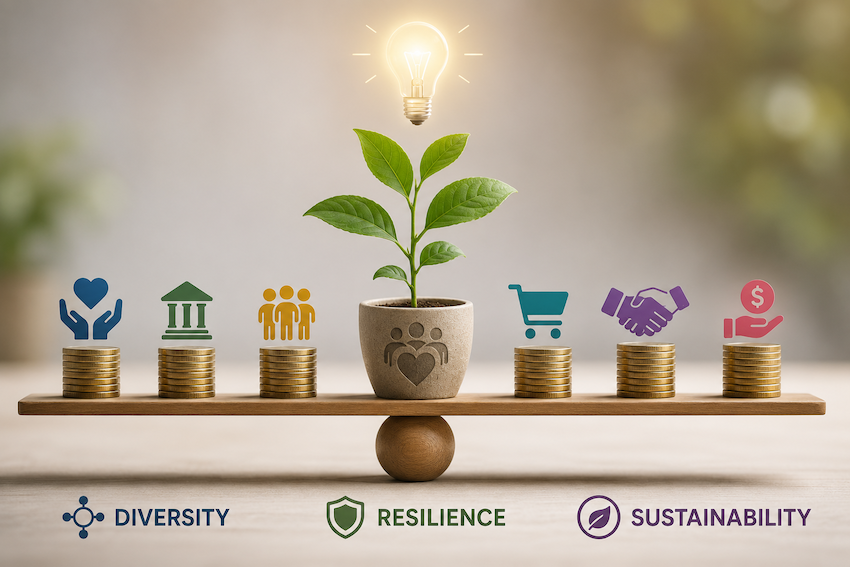
The most sustainable social enterprises are those that build diversified funding models: multiple income streams that complement each other, so that the loss or reduction of any one source doesn't threaten the project's survival.
-
Students mustMark as done
Funding is a journey, not a one-time event
Many first-time social entrepreneurs believe that once they secure funding, the challenge is over. In reality, fundraising is an ongoing process. As your organisation grows, your funding needs change. Early funding may help you test an idea, while later funding supports expansion, staffing, or long-term sustainability.
Successful organisations regularly review their funding strategy and adapt it to new opportunities and changing community needs.

-
Students mustMark as done
Understanding the main funding models
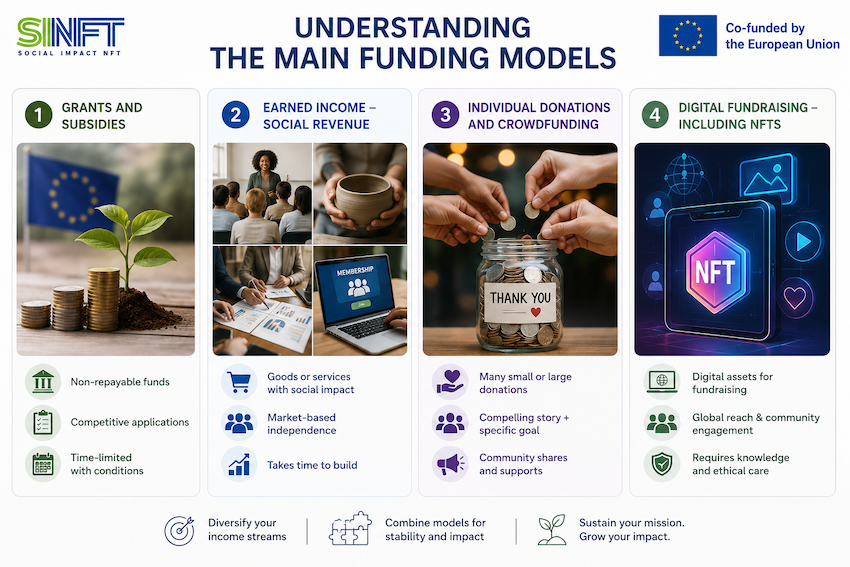
1. Grants and subsidies
Grants are funds provided by governments, foundations, or European institutions (such as Erasmus+, the European Social Fund, or Creative Europe) that do not need to be repaid. They are awarded competitively, usually based on a written application that describes the project, its objectives, its target group, and its expected impact.
Grants are often the first source of funding for early-stage social enterprises. They provide breathing space to develop and test a concept without commercial pressure. However, they come with reporting requirements, spending restrictions, and time limits — and they can end without warning if a programme closes or priorities change.
Key principle: never build a project that can only exist with one specific grant. If the grant ends, the project should be able to adapt.
2. Earned income — social revenue
Earned income is money generated by selling goods or services. For a social enterprise, the commercial activity is directly connected to the social mission — or at least supports it.
Examples of earned income in social enterprises:
• Training workshops offered to schools, companies, or community groups — with fees covering costs and contributing to the project.
• Products made by community members (crafts, food, clothing) sold in mainstream or online markets.
• Consulting or facilitation services offered to organisations that want to learn from your experience.
• Membership programmes that give supporters access to content, events, or community spaces.
Earned income gives a social enterprise the greatest independence and sustainability. But it requires building a market — which takes time and carries risk. It usually cannot be a significant income stream in the first year.
3. Individual donations and crowdfunding
Donations from individuals — small or large — are a vital income stream for many social enterprises. Crowdfunding platforms (Ulule, Goteo, GoFundMe, Miimosa) allow you to raise funds from a large number of small donors through a defined campaign with a specific goal and deadline.
Successful crowdfunding campaigns share three characteristics: a compelling human story, a specific and credible funding target, and an active community that shares the campaign before and during its launch. Without the third element, even the best story will struggle to reach its goal.
4. Digital fundraising — including NFTs
Digital tools have opened new possibilities for social enterprise fundraising. NFTs (Non-Fungible Tokens) are one example: digital assets — often artworks, stories, or community creations — that can be sold to raise funds for a cause.
When used responsibly, NFT campaigns can combine fundraising with storytelling, community engagement, and awareness-raising in ways that traditional fundraising cannot. They can reach global audiences, engage digital-native supporters, and give contributors a tangible connection to the cause they're supporting.
However, NFT campaigns also require technical knowledge, ethical care (see Course 4), and an existing community of potential supporters. They work best as part of a broader funding strategy — not as a standalone solution.
-
Students mustMark as done
Choosing the right funding mix
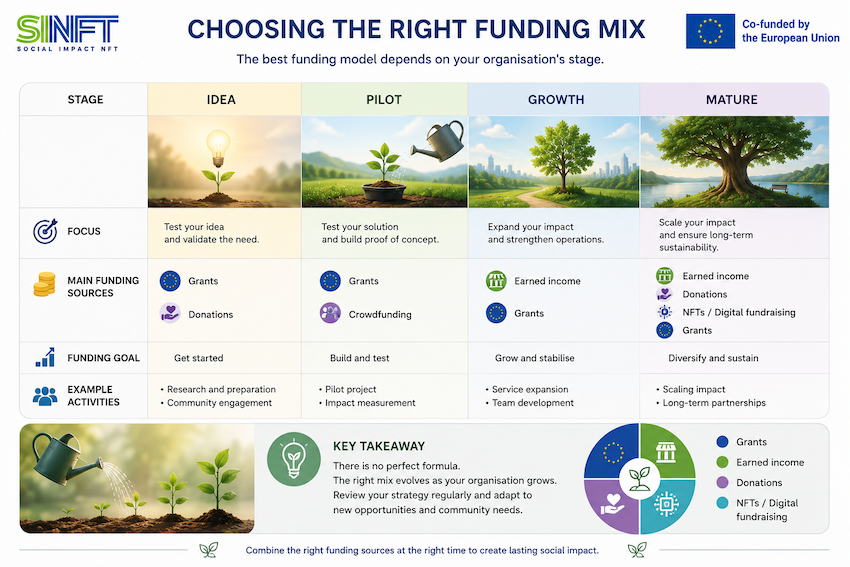
There is no single "best" funding model for every social enterprise. The most appropriate funding mix depends on your organisation's stage of development, its objectives, and its capacity.
In the early stages, grants and donations often provide the resources needed to test an idea and launch a pilot project. As your organisation grows, earned income becomes increasingly important, helping you build greater financial independence. More mature social enterprises typically combine several funding sources—including grants, earned income, donations, crowdfunding, and digital fundraising tools such as NFTs—to reduce risk and strengthen long-term sustainability.
Think of your funding strategy as something that evolves over time. Rather than relying on one source of income, aim to develop a balanced portfolio that supports both your social mission and your financial resilience.
Remember: the goal is not to replace one funding source with another, but to combine them in a way that allows your social enterprise to grow and create lasting impact.
-
Students mustMark as done
Common fundraising mistakes
Many promising social enterprises struggle not because their mission is weak, but because they make avoidable fundraising mistakes. Common pitfalls include:
- relying on a single funding source;
- applying for grants that don't match the project's mission;
- underestimating the time needed to prepare applications;
- failing to communicate impact clearly;
- treating fundraising as an occasional activity instead of an ongoing process.
Strong organisations view fundraising as relationship-building rather than simply asking for money.
-
Students mustMark as done
Designing your funding model — a practical exercise
A funding model is a plan that shows where your income will come from, in what proportions, over what timeframe. It doesn't need to be precise — especially at an early stage. But it needs to be honest and realistic.
For each income stream, ask:
• How much could realistically come from this source in Year 1? In Year 2?
• What conditions or effort does this stream require?
• What would happen to the project if this stream disappeared?
-
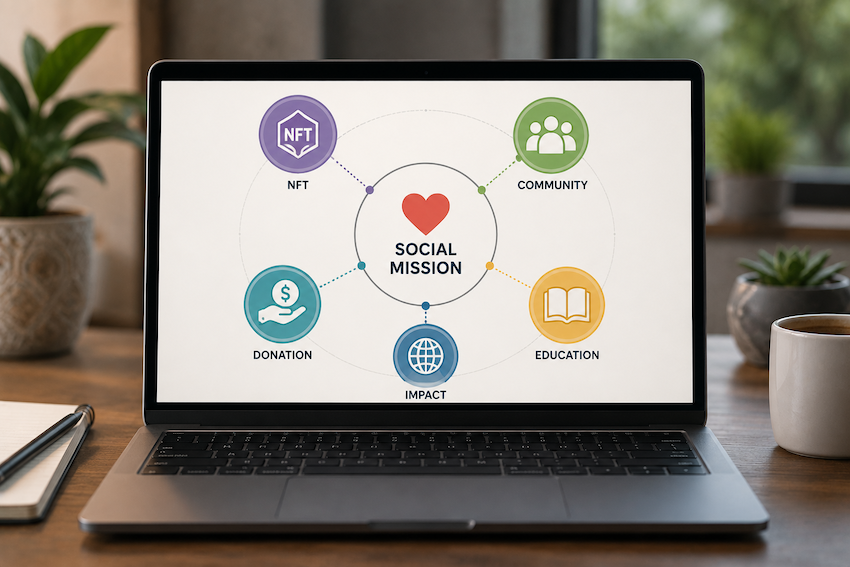
Technology is a tool—not an objective.
Whether you use NFTs, crowdfunding platforms, digital memberships, or blockchain, always begin with the same question:
How does this help the people we serve?
Digital innovation creates value only when it strengthens participation, transparency, accessibility, or long-term sustainability.
-
A healthy social enterprise combines several income streams.
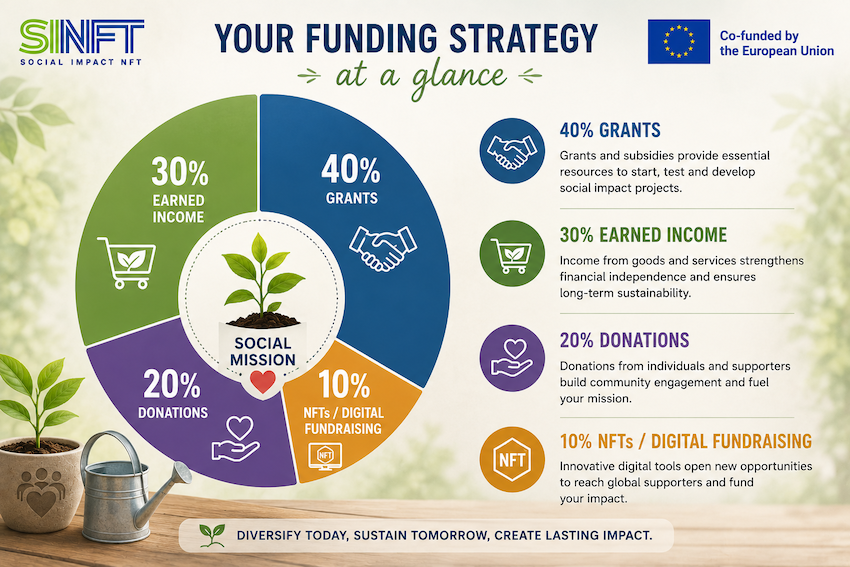
This is only one example.
The percentages will depend on your organisation.
-

Shape the Future.
Mint the Change.