
📦MODULE 1: Navigating the Digital World Responsibly
Digital Literacy & Online Safety
Section outline
-
-
-
-
Digital technologies play an important role in how people communicate, learn, work, and participate in society. Every day, we interact with online platforms, search for information, share content, and engage with digital communities. While these activities may seem routine, they leave traces that contribute to our digital footprint and influence how digital systems interact with us.
Understanding how digital platforms operate is an essential part of digital literacy. Social media networks, content-sharing platforms, online marketplaces, and cloud-based services all collect information about user behavior and use it to personalize experiences. The content we see, the advertisements we receive, and even the opportunities presented to us online are often shaped by algorithms that analyze our actions and preferences.
At the same time, the choices we make online can have long-term consequences. Information shared on the internet may remain accessible for years, contributing to a digital identity that can influence personal relationships, educational opportunities, and professional prospects. Managing privacy, understanding how personal data is used, and developing responsible online habits are therefore important skills for anyone participating in today's digital environment.
In this lesson, you will explore how digital platforms function, how social media feeds are personalized, and how online activity contributes to your digital footprint. You will also examine the risks associated with oversharing, learn strategies for protecting your privacy, and discover how to build a positive and authentic digital identity that reflects your values and goals.
Activities: 5
-
-
-
Welcome to Digital Literacy & Online Safety – Becoming a Cyber Guardian!
This beginner-friendly lesson is designed for youngsters, youth workers, students, educators, NGOs, and social entrepreneurs who want to navigate the digital world confidently and responsibly.
In today’s connected world, digital literacy goes far beyond using apps and social media. It means building strong cyber hygiene habits, understanding your digital rights, protecting your personal data, and using technology ethically. You will learn practical skills such as creating strong passphrases, using password managers, enabling Multi-Factor Authentication, recognizing phishing and social engineering attacks, managing privacy settings, and practicing safe digital payments.
The lesson also explores how to use AI and Large Language Models (LLMs) responsibly — turning them into powerful allies for creating impactful social content while avoiding risks like bias and misinformation.
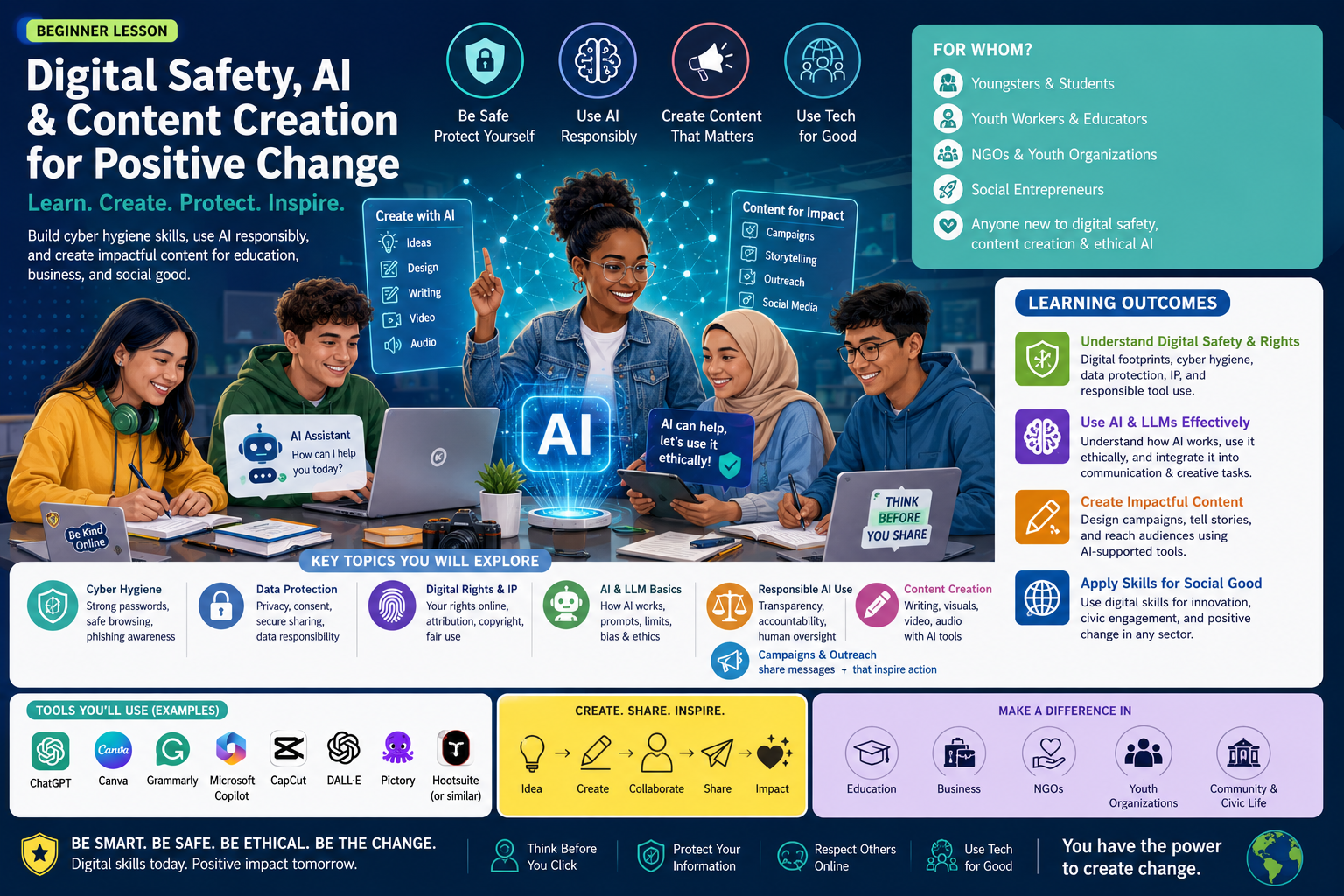
By the end of this lesson, you will not only protect yourself online but also gain the confidence to create positive change through ethical digital communication, storytelling, and awareness campaigns that benefit your community, education, and civic projects.
Activities: 14
-
-
-
As digital creators, whether we are designing campaigns for an NGO or exploring the world of Social Impact NFTs, we are both consumers and producers of digital content. With this big power comes great responsibility: respecting creation and navigating the complex ethics of high tech.
Understanding intellectual property is crucial for being a responsible digital participant. Creators need to know how copyright protects original works, when content can be reused legally and ethically, and why proper attribution matters. Respecting the rights of creators helps foster trust, collaboration, and a healthy digital ecosystem where innovation can thrive.
Beyond individual actions, technology also shapes society in broader ways. Digital systems can unintentionally reflect existing biases, create unequal outcomes, or exclude certain groups from participation. Access to technology, digital skills, and online opportunities is not distributed equally, making it important to consider who benefits from technological innovation and who may be left behind.
In this lesson, you will explore the foundations of intellectual property, examine the ethical implications of AI-generated content and deepfakes, and learn about the issues of bias, access, and responsibility in emerging technology ecosystems. Through critical reflection, you will develop a deeper understanding of how ethical principles can guide responsible technology use and digital creation.
Activities: 6
-
Shape the Future.
Mint the Change.