
Critical & Media Literacy
Why storytelling matters
Storytelling is one of the oldest forms of communication. Before books and the internet, people shared stories around fires or in villages. Stories connect people through emotions and imagination. In the digital age, storytelling has become even more powerful because social media allows stories to spread quickly.
The Power of Story vs. Fact
|
Fact-based message |
10,000 people lost their homes in the flood. |
|
Story-based message |
Maria, a 12-year-old girl, lost her school and now studies in a temporary classroom. She dreams of becoming a doctor, but she needs support to continue her education. |
|
Why story works better |
The story makes the issue real, personal, and urgent. It gives the audience someone to care about. |
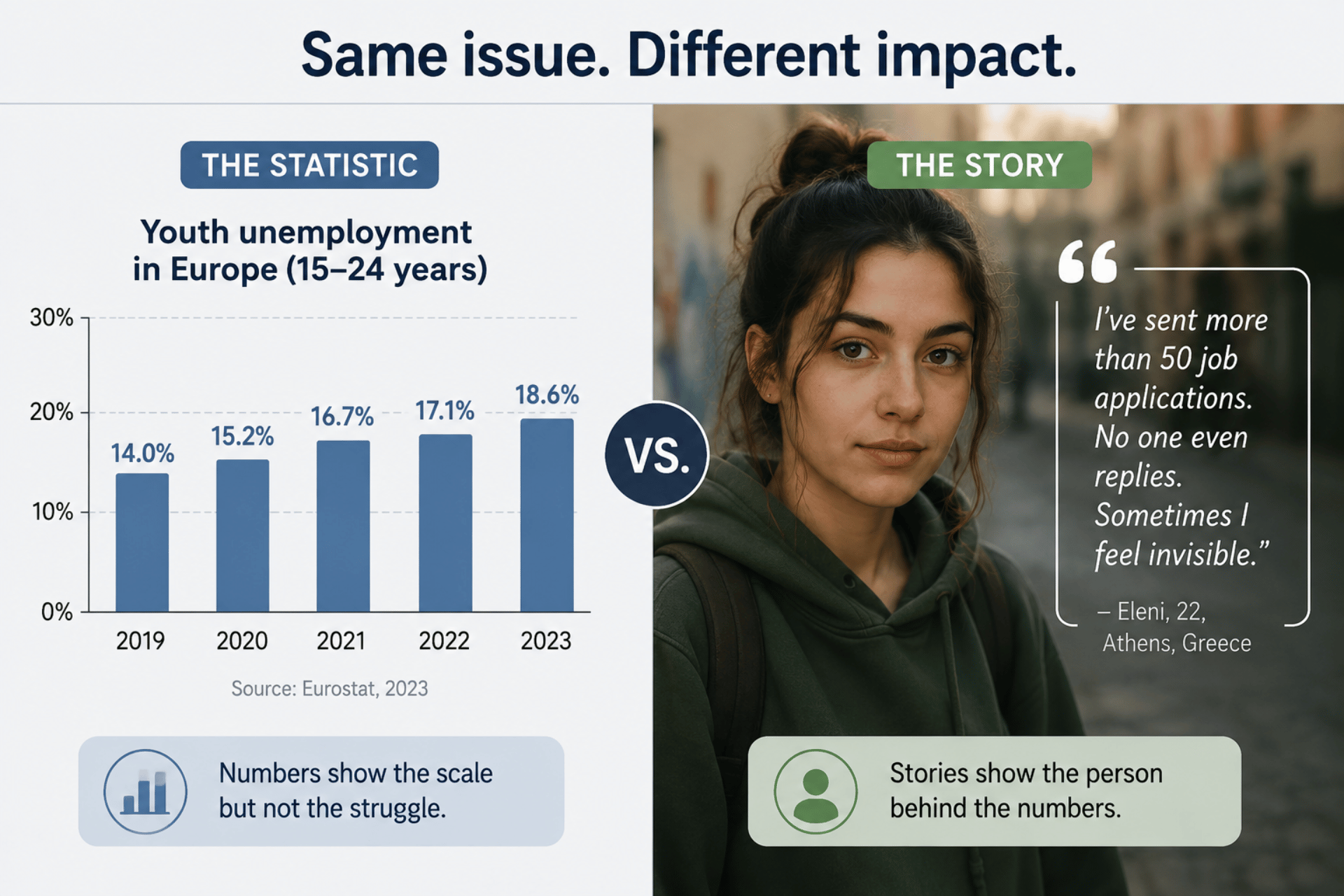
For Civic Engagement, Storytelling Helps People:
• Understand: issues in a simple, human way.
• Feel: empathy for others affected by the issue.
• Act: because they are emotionally moved, not just intellectually informed.
|
Key message from this video |
|
One of the most important insights in Adichie's talk is this: stories do not just inform — they define. When we hear only one story about a person, a place, or a community, we risk confusing that single story with the whole truth. For civic communicators, this is a critical warning. The stories we choose to tell — who we feature, whose voice we amplify, what details we include or leave out — shape how audiences understand entire groups of people and entire social issues. Authentic civic storytelling is therefore not just about being emotionally compelling: it is about being responsible, diverse, and aware of whose perspectives are being centred and whose are being left out. |

Shape the Future.
Mint the Change.