
Active / Digital Participation & Online Expression
Core Reading: The Advocate's Guide to Launching, Measuring, and the Web3 Future
Launching a digital participation initiative is a powerful milestone. However, hitting the "publish" button is only the beginning. To create sustainable social change, a digital project coordinator must balance bold promotion with absolute transparency, track the right impact metrics, and understand the emerging technological landscapes shaping the future of global civic engagement.
1. Ethical Promotion & Launching with Trust
When you introduce your digital initiative to the public, building and maintaining community trust is your most valuable asset. Ethical promotion ensures that your project remains credible, professional, and transparent:
-
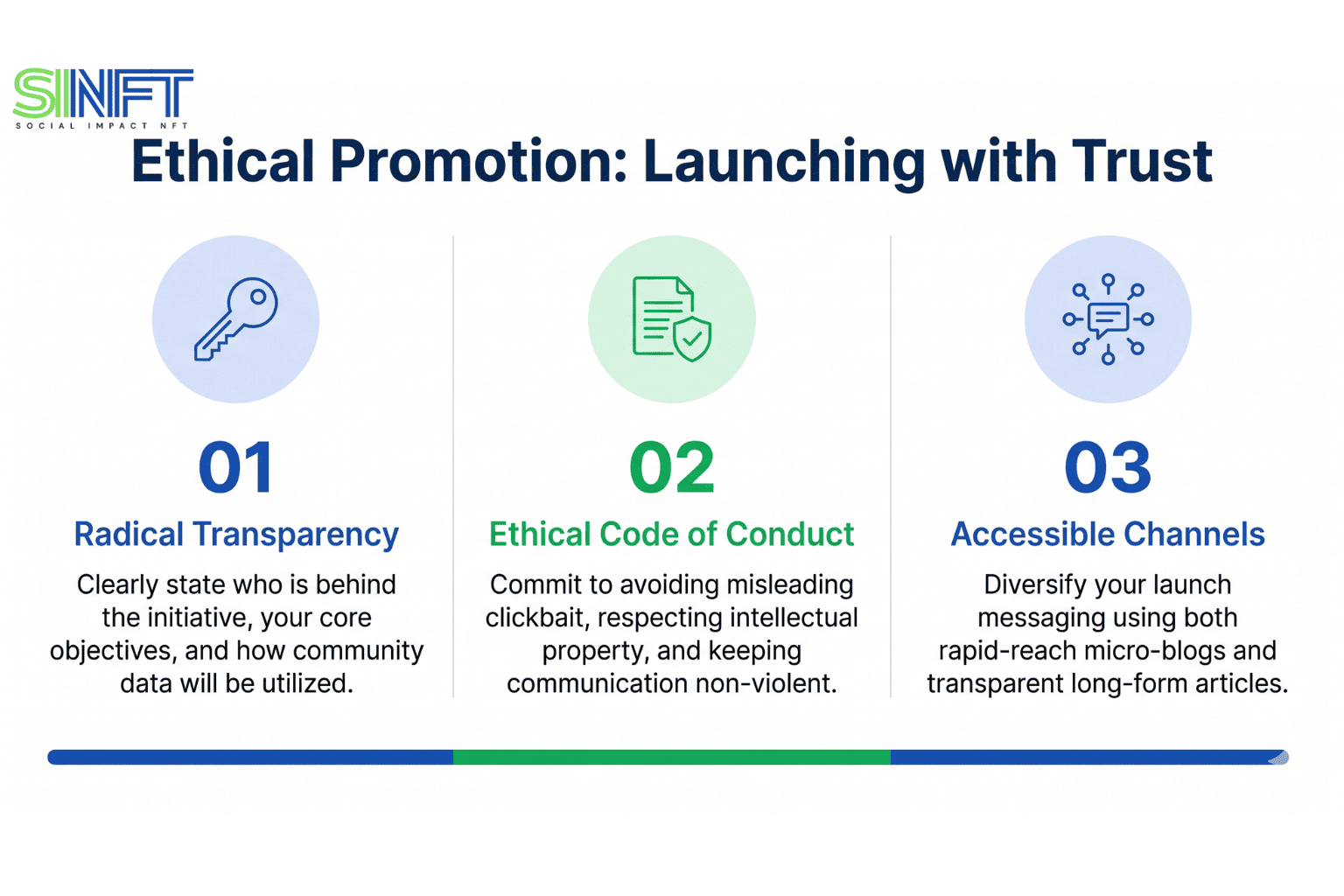
Radical Transparency: Clearly state who is behind the initiative, your core objectives, and how community data or inputs will be utilized. If your project receives backing or resources from a student council or an international network, disclose it openly.
-
The Ethical Code of Conduct: Establish an internal code of conduct for your campaign team. Commit to never using misleading clickbait headlines, respecting intellectual property rights when designing visuals, and maintaining a non-violent communication framework in public interactions.
-
Accessible Launch Channels: Diversify your launch messaging. Ensure your primary launch pitch is distributed via accessible micro-blogging channels for rapid community reach, alongside transparent, long-form articles for serious stakeholders.
2. Monitoring & Evaluation: Beyond Vanity Metrics
Many young advocates fall into the trap of measuring a project's success purely by vanity metrics—such as a sudden surge in social media "likes" or followers. While these numbers look good on a screen, they do not automatically equal real-world civic impact.
To properly evaluate your digital movement, track both quantitative and qualitative data:
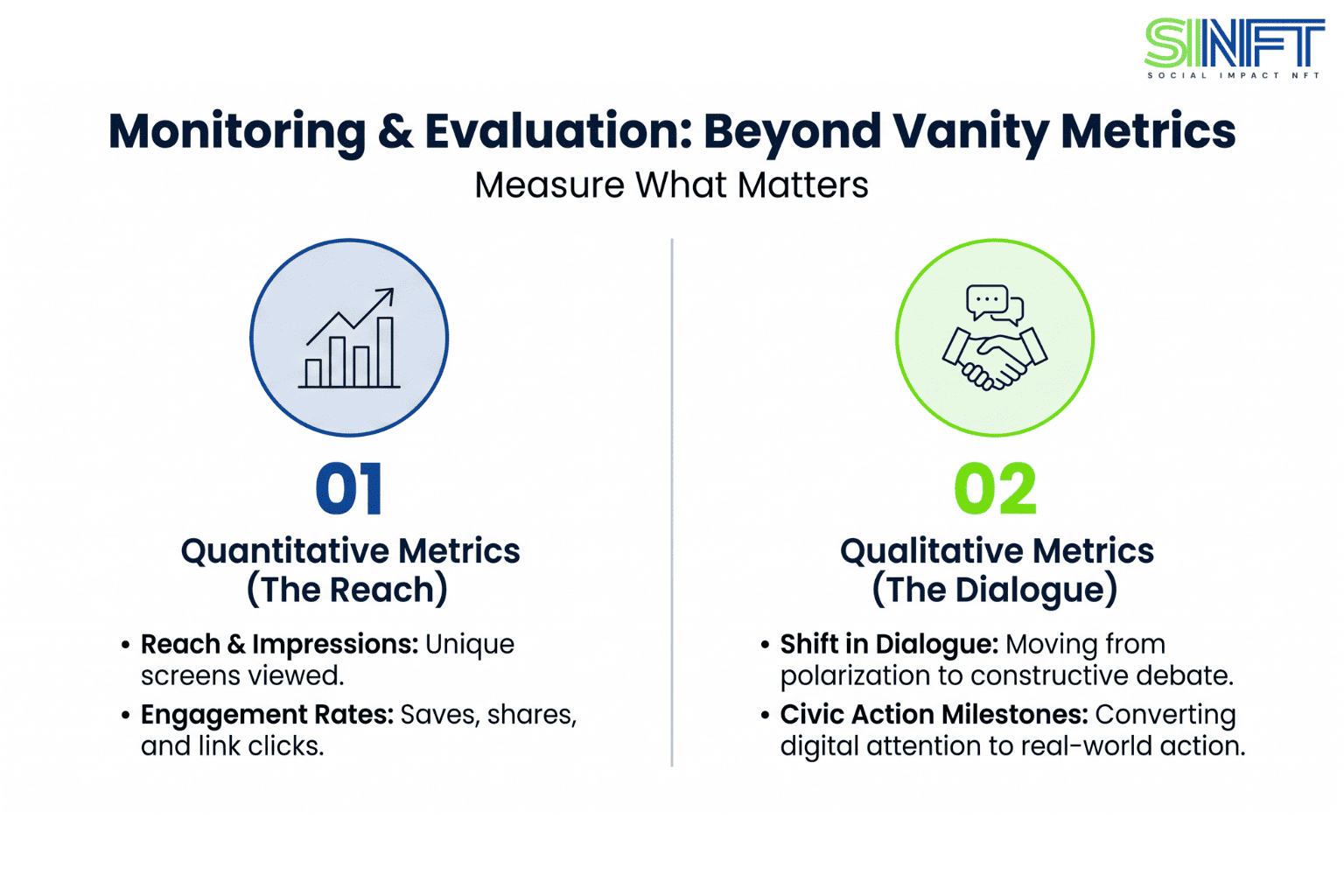
Quantitative Metrics (The Reach)
-
Reach & Impressions: How many unique screens actually viewed your campaign information?
-
Engagement Rates: Are users simply scrolling past, or are they actively saving your posts, sharing your infographics, and clicking your links to sign petitions or join offline initiatives?
Qualitative Metrics (The Dialogue)
-
Shift in Community Dialogue: Read the comment sections and forum discussions. Has your campaign successfully shifted the public tone from toxic polarization into a constructive, problem-solving debate?
-
Civic Action Milestones: How many users converted their digital attention into real-world action? (e.g., physically attending a community cleanup, downloading an educational toolkit, or submitting formal feedback to a local municipality).
3. Future Trends: Web3 and Decentralized Organizing (DAOs)
The digital public square is rapidly evolving beyond centralized social media platforms. As digital citizens look toward the future, new decentralized systems are completely redefining how global communities organize, govern themselves, and drive social impact:
-
Decentralized Autonomous Organizations (DAOs): A DAO is a community-led group that operates without a centralized, top-down hierarchy. Instead of a single director making all the decisions, rules and operations are managed transparently via blockchain technology. Members use digital governance tokens to vote directly on project proposals, budget allocations, and strategy.
-
Web3 Transparancy: Web3 ecosystems allow for decentralized transparency. By utilizing secure public ledgers, future youth organizations can prove exactly how project funds are managed or track digital community voting processes with absolute, un-tamperable proof.
-
Global Solidarity Ecosystems: Web3 tech enables local community initiatives to bypass traditional financial boundaries, connecting small, grassroots youth projects directly with global networks of supporters who share the exact same values.
What's Next?
Now that you have explored the frameworks for an ethical launch, impact evaluation, and the decentralized future of digital organizing, scroll down to access your Draft Peer Review Workshop Forum, where you will pitch your final concept to the cohort!
Shape the Future.
Mint the Change.