
Active / Digital Participation & Online Expression
Core Reading: Securing Your Digital Fortress & Mitigating Risks
As a digital citizen and project coordinator, managing your public and private data is your absolute first line of defense. When your online visibility grows through social campaigns, your personal security protocols must grow with it. This reading will cover the essential technical steps to secure your presence and the strategic actions needed to handle active online threats.
1. Managing Your Digital Footprint & Data Privacy
Your digital footprint is the permanent trail of data, tags, and records you leave behind across the internet. To lock down your personal information and project data, every change-maker must practice strict digital hygiene:
-
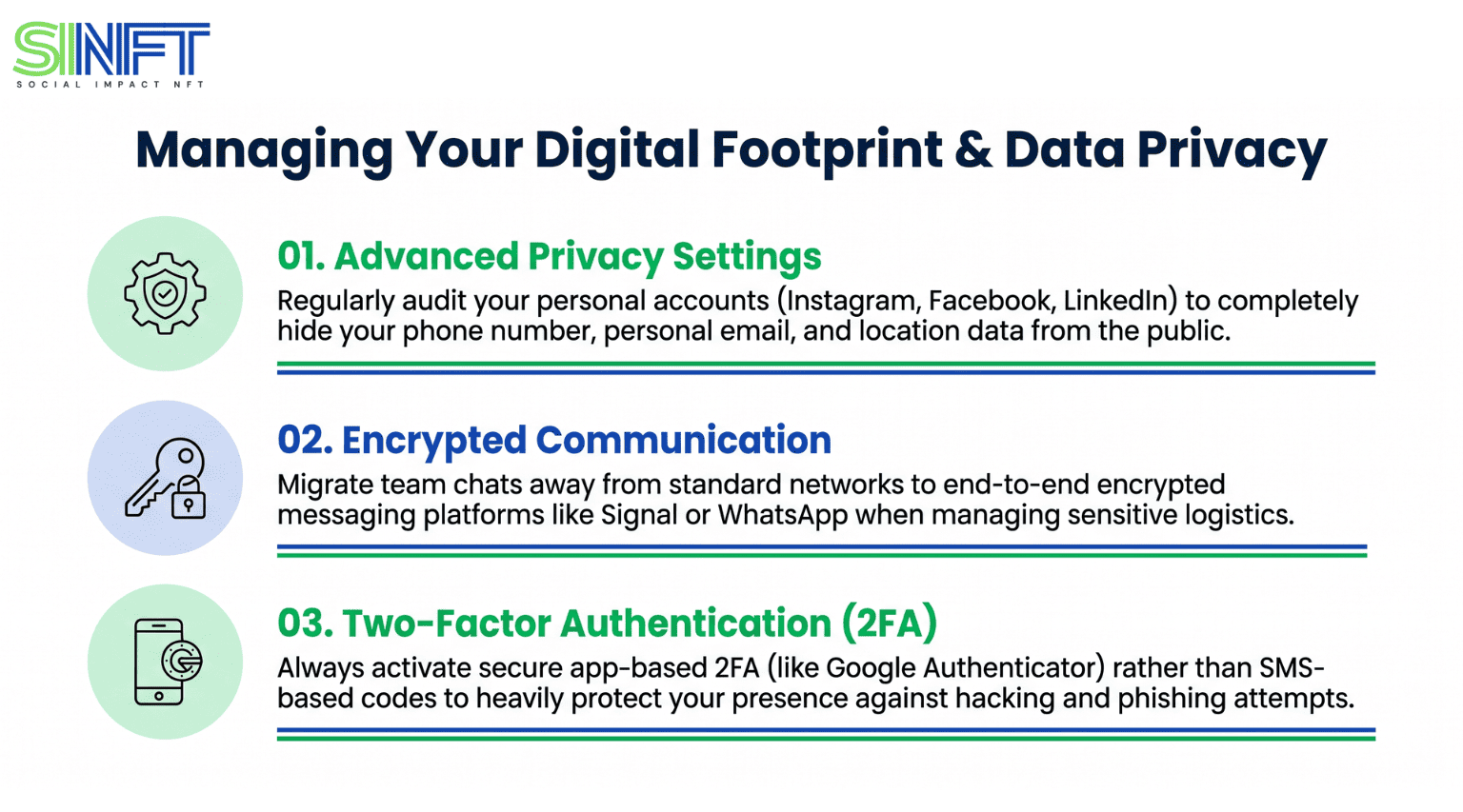
Advanced Privacy Settings: Regularly audit your personal accounts (Instagram, Facebook, LinkedIn). Ensure that sensitive information like your phone number, personal email, and location data are completely hidden from the general public.
-
Encrypted Communication: When discussing sensitive project details, organizing volunteer logistics, or managing community grievances, migrate your team chats away from standard networks to end-to-end encrypted messaging platforms like Signal or WhatsApp.
-
Two-Factor Authentication (2FA): Always activate app-based 2FA (using tools like Google Authenticator) rather than SMS-based 2FA on all your accounts. App-based authentication is significantly more secure against phishing and unauthorized hacking attempts.
2. Identifying and Facing Online Threats
When you publish content regarding social issues, you might face targeted online resistance. It is critical to recognize and mitigate these three common digital threats:
Phishing Attempts
-
What it is: Fraudulent messages, emails, or links designed to look like official platform alerts, created entirely to trick you into revealing your account passwords or login details.
-
How to handle it: Look for artificial urgency (e.g., "Your account will be deleted in 24 hours"). Never click on unsolicited links or input your credentials without thoroughly verifying the sender's exact email domain suffix.
Doxxing Attacks
-
What it is: Maliciously gathering and publishing private identifiable information (such as your home address, personal phone number, or family details) online to cause real-world fear, panic, or intimidation.
-
How to handle it: Complete immediate privacy audits. If your information is leaked, document everything with screenshots and request Google to remove links containing your private personal data from public search indices.
Coordinated Digital Harassment
-
What it is: Coordinated, aggressive spamming, name-calling, or cyberbullying within your campaign's comment sections, usually driven by bad-faith actors or trolls trying to disrupt your work.
-
How to handle it: Document severe threats with screenshots, utilize the platform's block/mute metrics, and protect your team's mental health by disabling or filtering comment threads containing specific hostile keywords.
3. Digital Well-being: Balancing Action and Screen Boundaries
Digital safety isn't just about technical settings; it is also about protecting your mental space. Activism and intensive online participation take a heavy emotional toll, making digital well-being a key operational survival skill.
-
The "Digital Curfew": Establish a strict time to step away from your screens. Turn off all project-related push notifications at least two hours before you go to sleep to allow your brain to exit a state of constant "fight-or-flight" vigilance.
-
The Power of Offline Spaces: Never run a digital movement entirely in isolation. Always anchor your online work with real, offline community relationships. Processing digital stress through face-to-face conversations with your peers or team members strips online hostility of its emotional power.
What's Next?
Now that you have reviewed the core strategies for securing your digital fortress, scroll down to access your Practical Assignment: The Personal Privacy Audit, where you will put these security protocols into immediate action!

Shape the Future.
Mint the Change.