
Active / Digital Participation & Online Expression
Navigating the Algorithmic Wilderness & Spotting Misinformation
1. How Algorithms Create Filter Bubbles
When you log onto a digital platform, you are not seeing an objective version of the internet. You are seeing a customized ecosystem managed by an algorithm.
Social media algorithms are complex mathematical formulas designed with one primary goal: maximizing user retention and engagement. The longer you stay on an app, the more advertisements the platform can show you. To keep you hooked, the algorithm analyzes your digital footprint—tracking every second you spend hovering over a post, every comment you write, and every link you click.
Using this data, the algorithm filters out perspectives it predicts you won't like, trapping you inside an invisible, personalized echo chamber known as a Filter Bubble.
The Dangers of Filter Bubbles for Activists:
-
Polarization: It distorts public dialogue by convincing you that your worldview is the absolute majority opinion, making opposing viewpoints seem extreme or illogical.
-
Information Gaps: It blocks out crucial data and alternative community realities that you need to understand to build a successful, inclusive social campaign.
-
Sensationalism: Algorithms prioritize outrage and emotional, sensationalized content over calm, evidence-based facts because outrage generates the highest engagement rates.
2. Dismantling Misinformation: The Fact-Checking Toolkit
As a digital citizen and future project coordinator, your credibility is your currency. If you share unverified information or "fake news"—even accidentally—you damage the reputation of your entire organization and cause.
To protect your digital voice, you must learn to separate fact from manipulation by utilizing standard verification techniques:
Step 1: The SIFT Framework
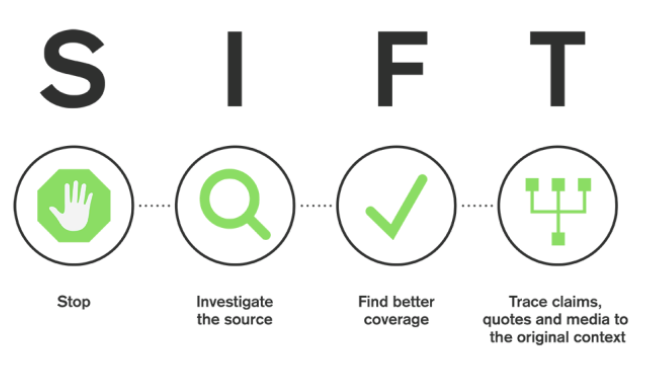
Before you hit the "share" button on a viral or emotional post, run it through the four steps of SIFT:
-
S - Stop: Check your emotional reaction. If a headline makes you intensely angry or proud, stop scrolling. It was likely designed to trigger you into sharing it without thinking.
-
I - Investigate the Source: Who published this information? Look at the profile or website URL. Is it a verified, credible organization, or is it a satirical site, a brand-new account, or a platform mimicking a real news outlet?
-
F - Find Better Coverage: Look up the core claim across trusted global and local media platforms. Is anyone else reporting this story? If a massive piece of news is only being claimed by a single random account, treat it with extreme skepticism.
-
T - Trace Claims to the Original Context: Find the original source of the quote, image, or video statistic. Misinformation frequently takes real data completely out of context to twist its meaning.
Step 2: Digital Fact-Checking Tools
-
Reverse Image Search: If you see a shocking image tied to a current event, save it and upload it to Google Images or TinEye. This allows you to see exactly when and where that photo was originally taken, proving if an old photo is being repurposed to spread fake news about a new crisis.
-
Trusted Fact-Checking Databases: Before launching a debate or campaign around a controversial claim, cross-verify it on global, independent platforms like UNESCO's Media Literacy Resources or specialized local fact-checking platforms.
3. Gathering Evidence for Your Digital Initiative
To move from theory to action in your final Digital Participation Plan, your campaign cannot just rely on personal opinions. You must build an evidence-based case to mobilize your community and gain the trust of NGOs, CSOs, and social enterprises.
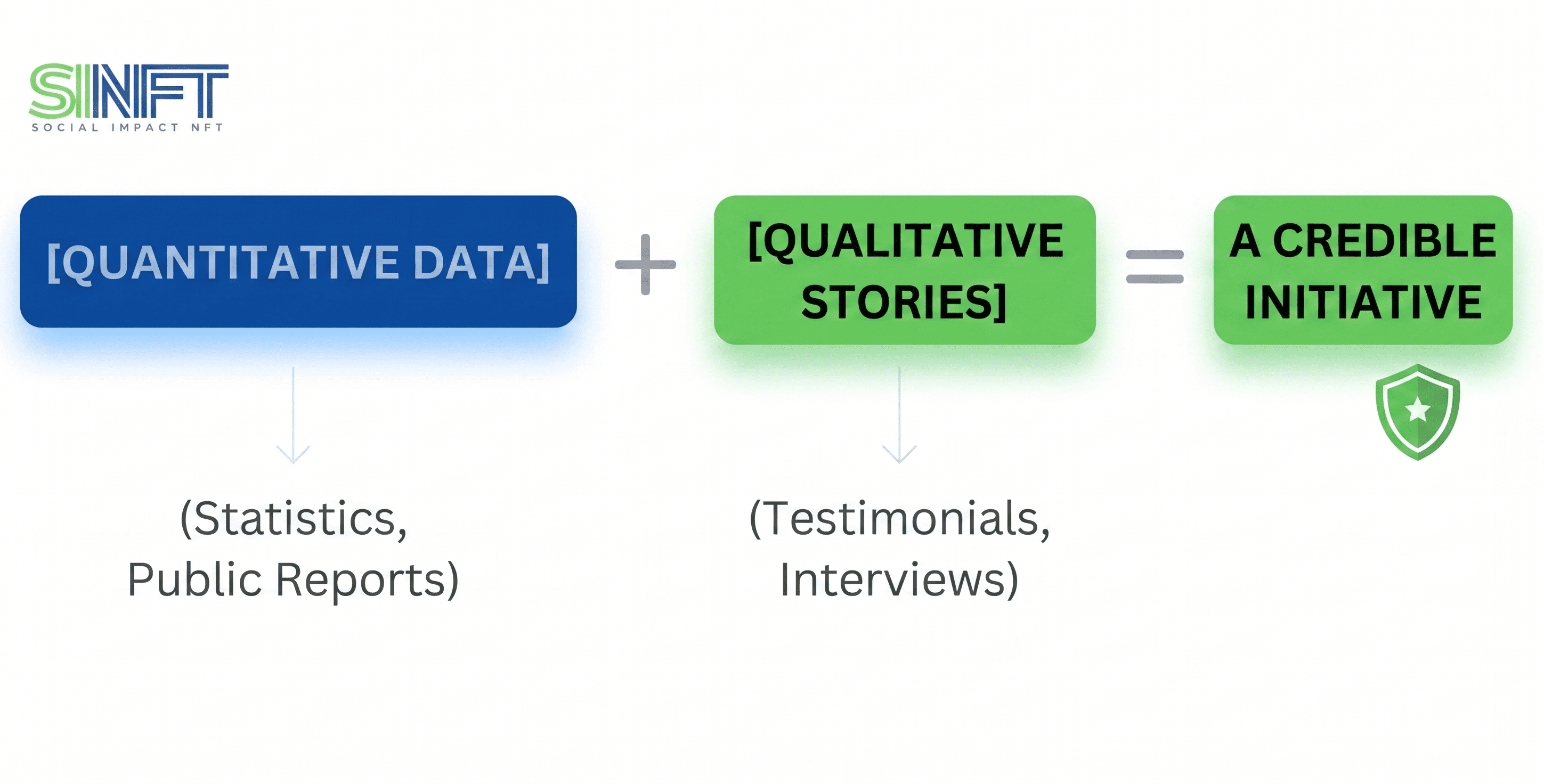
A rock-solid digital advocacy campaign balances two types of evidence:
-
Quantitative Evidence (The Numbers): Gather official research, open-source databases, and public reports to prove the structural reality of the issue (e.g., local pollution rates, youth unemployment data).
-
Qualitative Evidence (The Human Factor): Collect ethical, consensual digital interviews, quotes, or video testimonials from the people directly affected by the issue. Data proves the problem exists, but human stories motivate the public to take action.
Quick Challenge Call-Out Box
Are you ready to put these exact guidelines to the test? Right below this article, you will enter the interactive Fact-Checker Challenge simulation on Moodle.
Get your digital toolkit ready—your credibility as an advocate starts right now.

Shape the Future.
Mint the Change.