
Active / Digital Participation & Online Expression
Core Reading: From Passive Scrolling to Active Digital Citizenship
1. Demystifying the "Digital Citizen"
In the early days of the internet, users were primarily consumers. We logged on to read websites, watch videos, and look up information. Today, our relationship with technology has completely transformed. The digital space is no longer just a library—it is a global public square, a marketplace, and a platform for democratic dialogue.
Because we live so much of our lives online, a new concept has emerged: Digital Citizenship.
Definition: Digital citizenship is the ability to safely, responsibly, critically, and effectively navigate digital technologies to engage in society, protect personal well-being, and advocate for social change.
Being a citizen of the internet is not simply about having an account on Instagram, TikTok, or Discord. It is about how you choose to use those platforms to impact the community around you.
2. The Spectrum of Digital Participation
To understand where you stand in the digital ecosystem, it helps to look at the Spectrum of Participation. Most internet users sit on the passive side of this spectrum, but the goal of this course is to help you consciously move toward active civic engagement.
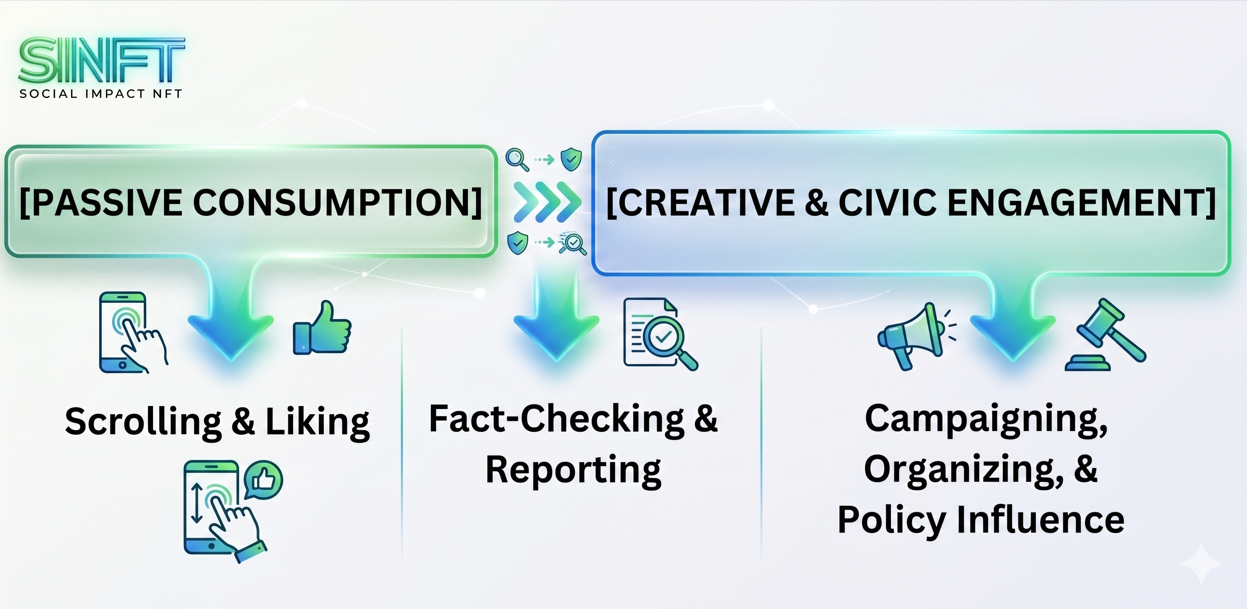
Stage 1: Passive Consumption
-
Behavior: Mindlessly scrolling through feeds, viewing stories, and hitting "like" on posts without reading them fully.
-
Impact: Near zero. In fact, passive scrolling often feeds the algorithms with data without creating any positive value for the community.
Stage 2: Conscious Interaction
-
Behavior: Critically evaluating content, leaving constructive comments, identifying fake news, and reporting harmful content or hate speech to platform moderators.
-
Impact: Low to medium. You are actively protecting the digital ecosystem from becoming toxic or misleading.
Stage 3: Active Digital Advocacy
-
Behavior: Designing original digital content, writing articles, creating a 1-Minute Cause Story video, starting online petitions, launching crowdfunding initiatives, or utilizing collaborative spaces to coordinate real-world youth movements.
-
Impact: High. You are using your digital voice to shift public opinion, raise awareness, and mobilize communities for a social cause.
3. The Digital Social Contract: Rights vs. Responsibilities
Just like physical citizenship, digital citizenship is built on a delicate balance of privileges and duties. You cannot have digital rights without also upholding digital responsibilities.
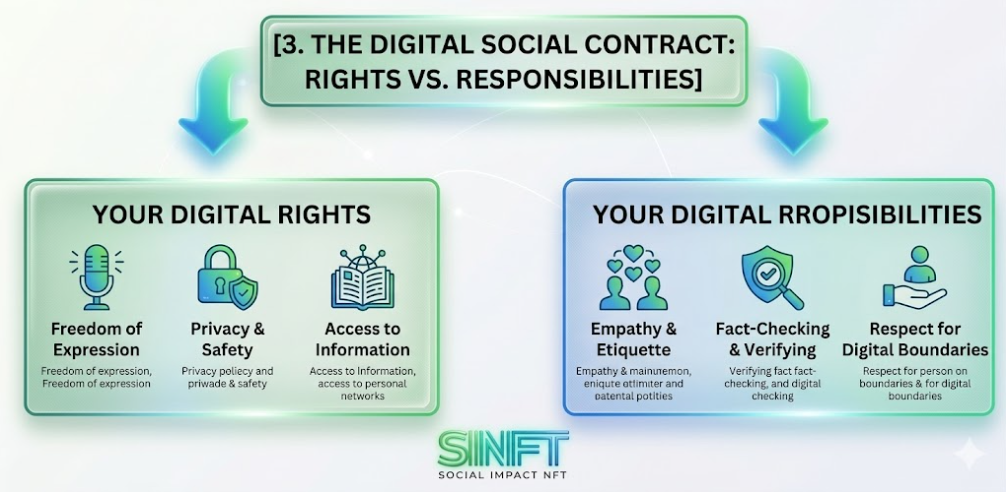
Your Fundamental Digital Rights
-
Freedom of Expression: The right to state your opinions, ideas, and beliefs online creatively and openly.
-
Digital Privacy & Safety: The right to protect your personal data, secure your digital footprint, and remain safe from cyberbullying, doxxing, and harassment.
-
Access to Information: The right to search for, receive, and share reliable, objective knowledge across global digital platforms.
Your Crucial Digital Responsibilities
-
Digital Empathy & Etiquette: The duty to communicate respectfully, engage in non-violent debate, and avoid toxic polarization or trolling.
-
Fact-Checking Before Sharing: The ethical responsibility to verify sources before passing information along, ensuring you do not spread damaging misinformation.
-
Respecting Others' Spaces: Honoring the privacy, intellectual property, and digital boundaries of your fellow citizens.
4. Turning Hashtags into Real-World Action: Youth-Led Impact
Can a digital initiative truly make a difference in the physical world? The answer is a resounding yes. Around the globe, young people are proving that digital tools can completely bypass traditional barriers to create immediate social impact.
Consider how modern youth movements operate:
-
The Spark: An individual identifies a social injustice, local environmental issue, or human rights concern and frames it into a compelling digital story.
-
The Amplification: Utilizing targeted hashtags, visually striking infographics, and shareable short-form videos, the message spreads across borders, breaking free from localized information blocks.
-
The Mobilization: Digital networks (such as online petition platforms, specialized group chats, or community forums) organize those inspired users into physical action—leading to community cleanups, peaceful protests, or direct policy advocacy with local governments.
The internet gives you a global megaphone. The question isn't whether you have a voice; the question is: How will you choose to use it?
Critical Reflection Call-Out Box
Before moving to the next session, take 30 seconds to look at your personal smartphone. Open your most-used social media app. Look at your last three actions (a comment, a share, or a scroll).
Where did those actions fall on the Spectrum of Participation? Were you a passive bystander or an active citizen?

Shape the Future.
Mint the Change.