
Project Planning & Responsibility
Deep Dive: Risk Management & The Digital Minefield
In project management, optimism is a great motivator, but preparation is what ensures survival. No matter how detailed your Work Breakdown Structure (WBS) is or how committed your team feels, unexpected events will occur. Risk Management is the proactive practice of identifying, analyzing, and responding to potential threats before they jeopardize your project's goals.
Part 1: Traditional Project Risks
Traditional youth work and local community projects usually face operational, human, and logistical barriers. The three most common traditional risks include:
1. Timeline Delays (Scope & Schedule Creep)
-
The Risk: Tasks take longer than originally planned (e.g., waiting weeks for a partner's approval, venue cancellation, or team members falling behind).
-
The Impact: Missing a critical milestone can create a domino effect, pushing back the launch date and ruining your project's momentum.
2. Budget Fluctuations & Resource Shortages
-
The Risk: Inflation, unexpected material costs, or hidden bank fees eat into your funds.
-
The Impact: Running out of money halfway through implementation forces the team to cut corners, reduce project quality, or downsize events.
3. Low Stakeholder & Participant Engagement
-
The Risk: Planning a highly educational workshop or bootcamp, but having very few young people register or actually show up on the day of the event.
-
The Impact: High organizational costs with little to no social impact, leading to poor final project reporting.
The Ultimate Tool: The Risk Assessment Matrix
To prevent panic when a crisis occurs, professional project managers utilize a Risk Matrix. This tool ranks every potential risk based on two fundamental metrics:
-
Probability: How likely is it that this risk will actually happen? (Ranked from 1 - Unlikely to 5 - Almost Certain).
-
Impact: How badly will it damage the project if it happens? (Ranked from 1 - Insignificant to 5 - Catastrophic).
Risk Score =Probability X Impact
By calculating the Risk Score, you can easily categorize your project's vulnerabilities:
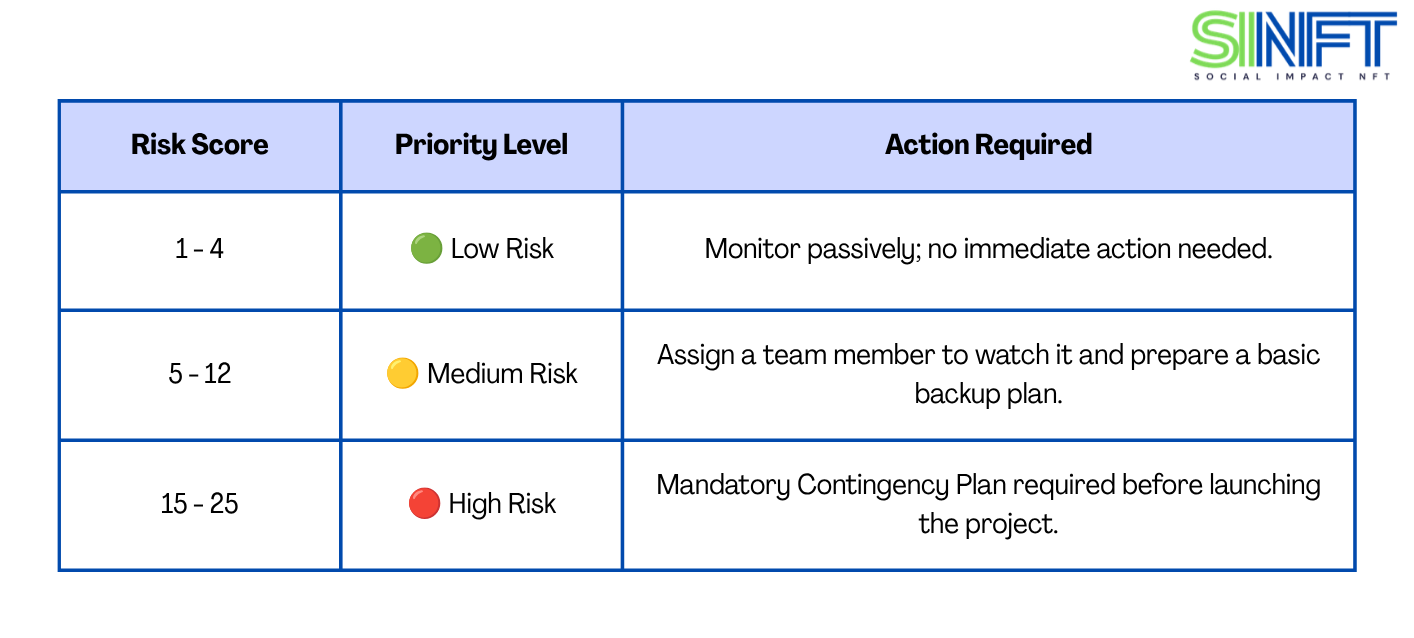
Part 2: Navigating the Digital & NFT Minefield
When your youth initiative moves into Web3, digital media, or utilizes a Social Impact NFT (SINFT) model, traditional risk management tools must adapt to a highly unpredictable technical space. Here is a detailed breakdown of digital-native risks and how to mitigate them:
1. Technical Barriers & User Frustration
-
The Anatomy of the Risk: Digital tools, blockchain platforms, or Web3 integrations can be incredibly confusing for everyday users. Young participants or local community members might get stuck trying to set up digital wallets, losing interest due to complicated user interfaces.
-
Mitigation Strategy: Do not expect your audience to be tech experts. Build an aggressive educational onboarding strategy. Create step-by-step video tutorials, host short "how-to" workshops, and make sure your Tech Support officer is readily available to unblock users.
2. Security Dangers: Scams & Fake Collections
-
The Anatomy of the Risk: Malicious actors online can easily replicate your visual art style, create fake social media accounts, or deploy copycat collections to deceive your audience and steal their digital assets.
-
Mitigation Strategy: Establish an absolute rule of Official Channels Only. Educate your community to never click links outside of your verified website or official communication hubs. Your Communications Lead must actively monitor the web for copycats.
3. Absence of Digital Traction (The "Cold Market" Effect)
-
The Anatomy of the Risk: Launching an innovative digital gallery or a social impact collection, only to find zero engagement, no buyers, and no digital footprints because the project feels too abstract.
-
Mitigation Strategy: Technology alone does not create impact; human connection does. Your Storytellers and Copywriters must build a powerful, transparent narrative. Show the real-world faces, the local communities, and the exact social causes that your digital assets are supporting.
4. Environmental Criticism & Ethical Concerns
-
The Anatomy of the Risk: Certain blockchain legacy networks have faced severe public backlash regarding high energy consumption. If your project uses these platforms, you may face ethical criticism from eco-conscious youth organizations.
-
Mitigation Strategy: Prioritize sustainability by selecting modern, eco-friendly, energy-efficient networks (such as those using Proof-of-Stake consensus mechanisms), which reduce energy footprints by over 99%. Be transparent about your tech stack and actively communicate your green approach.
🔑 The Core Takeaway: Maintaining Responsibility
Risk management is not about predicting a perfect, flawless future; it is about building a resilient team engine. When a project encounters an obstacle, a professional leader does not look for excuses or point fingers. By mapping out your Risk Matrix early and establishing clear contingency plans, your team maintains absolute control and responsibility—ensuring social impact even when navigating a crisis.
Next Steps
Scroll down to open our next component, The Risk Matrix Interactive Template, where you will plot out your own project's threats and draft your very first contingency plan!

Shape the Future.
Mint the Change.