
Project Planning & Responsibility
📝 Video 4.1 & 4.2 Summary: Distributing Roles & Team Dynamics
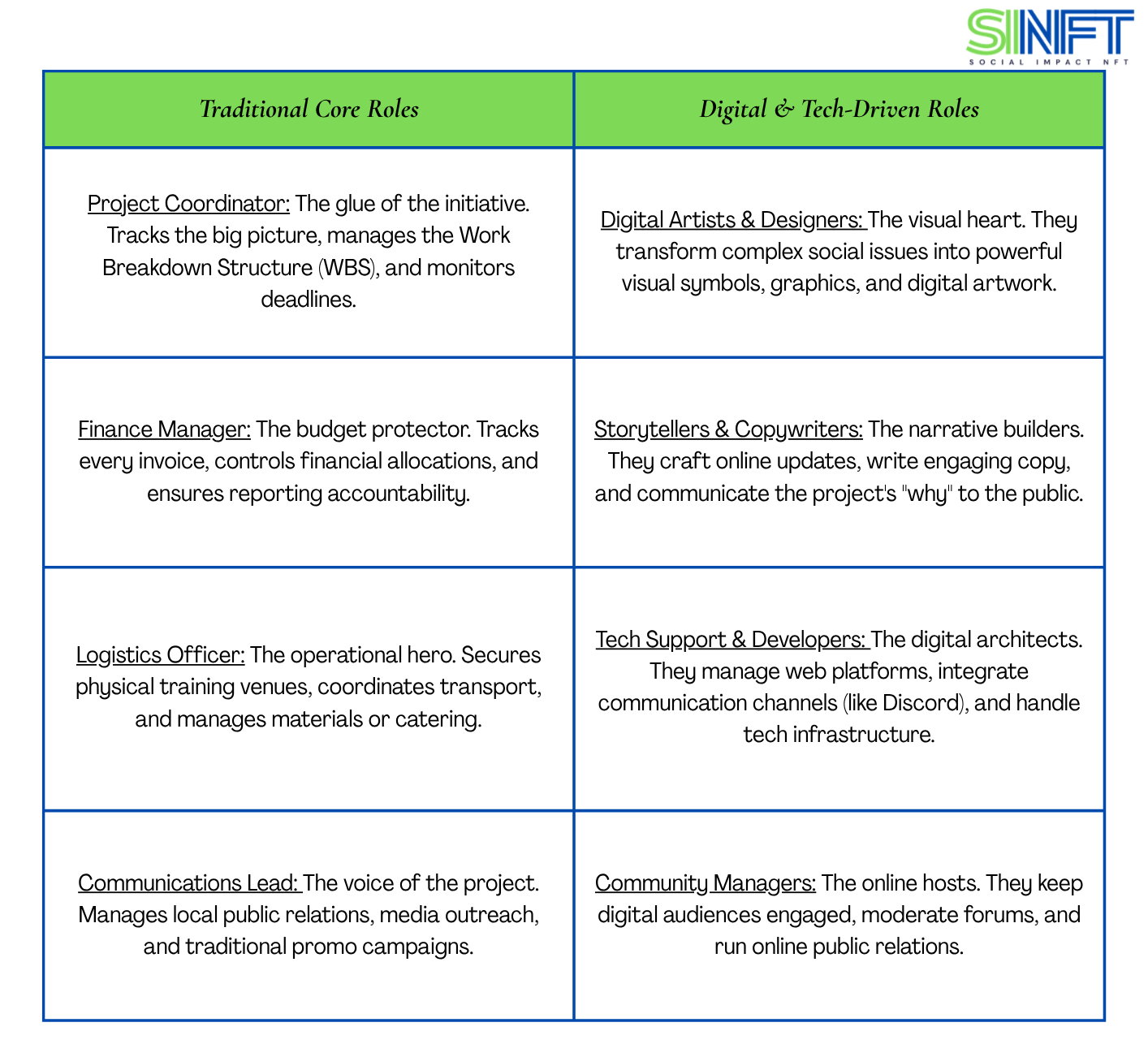
Traditional vs. Digital Project Roles
Depending on whether your youth initiative takes place in a local physical community or operates as a modern online platform (such as a digital campaign or a Social Impact NFT project), your team structure will require different types of superpowers:
The Core Pillars of Team Success
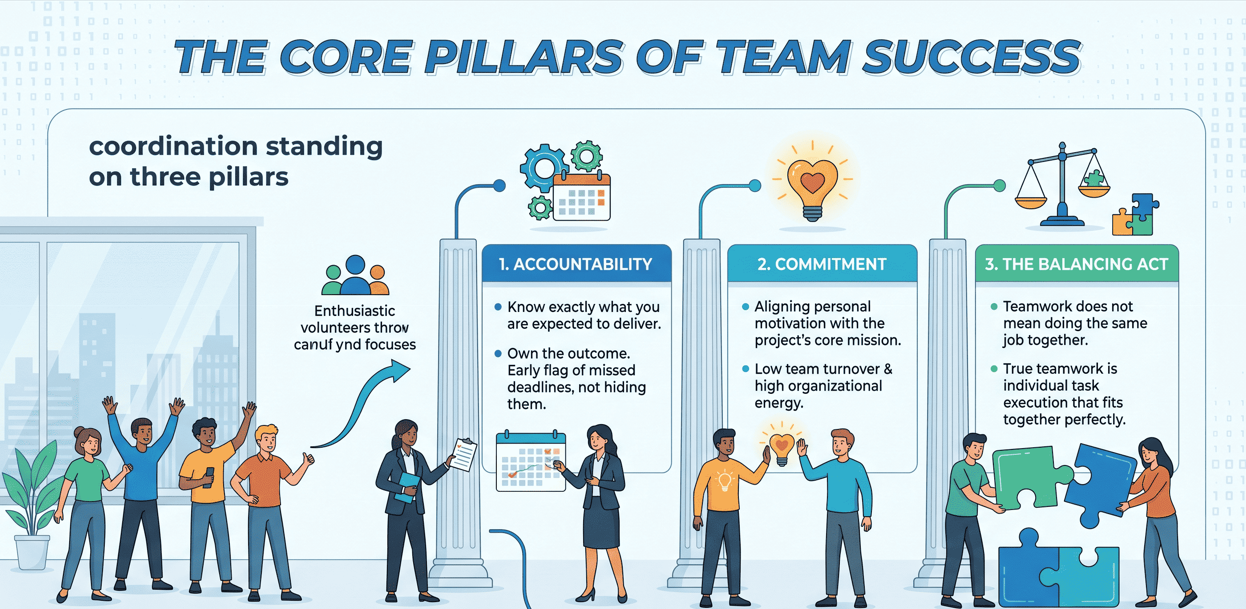
To turn a group of enthusiastic volunteers into an unstoppable, highly efficient team, your coordination must stand on three pillars:
-
Accountability: This means knowing exactly what you are expected to deliver and owning the outcome. In a professional team, if a deadline is missed, the owner flags it early rather than hiding it.
-
Commitment: Aligning personal motivation with the project's core mission. High commitment reduces team turnover and keeps organizational energy high throughout the project lifecycle.
-
The Balancing Act: Teamwork does not mean doing the exact same job together. True teamwork means executing your individual, assigned tasks independently so that all the individual pieces fit together perfectly at the end.
Next Steps
Now that you understand the difference between traditional and digital project roles, scroll down to test your management instincts in our Scenario Exercise: Assembling the Dream Team!

Shape the Future.
Mint the Change.