
Project Planning & Responsibility
📝 Video 3.4 Summary: Timelines & Material Resources
A great task list is useless without a ticking clock and the right tools. To transition from a simple list of actions into a bulletproof operational plan, you must master two final logistical elements: Time Optimization and Physical Resource Mapping.
1. Mastering Your Project Timeline
Time is a project coordinator's most valuable—and unpredictable—resource. To prevent delays and chaotic rushes, apply these two fundamental project management techniques:
-
Milestones: Think of milestones as your project's major checkpoints or "anchors." They are zero-duration achievements that show your team is moving forward successfully.
-
The Buffer Rule: Never assume things will go perfectly. Always build an intentional safety cushion into your schedule to absorb unexpected delays (e.g., tech issues, printing delays, bad weather).
-
Pro Tip: If a task like printing event handouts technically takes 2 days, schedule it to be completed 5 days before your project day.
-
💡 Remember: A realistic timeline doesn't track how fast your team can work when everything goes right—it tracks how well your project survives when things go wrong!
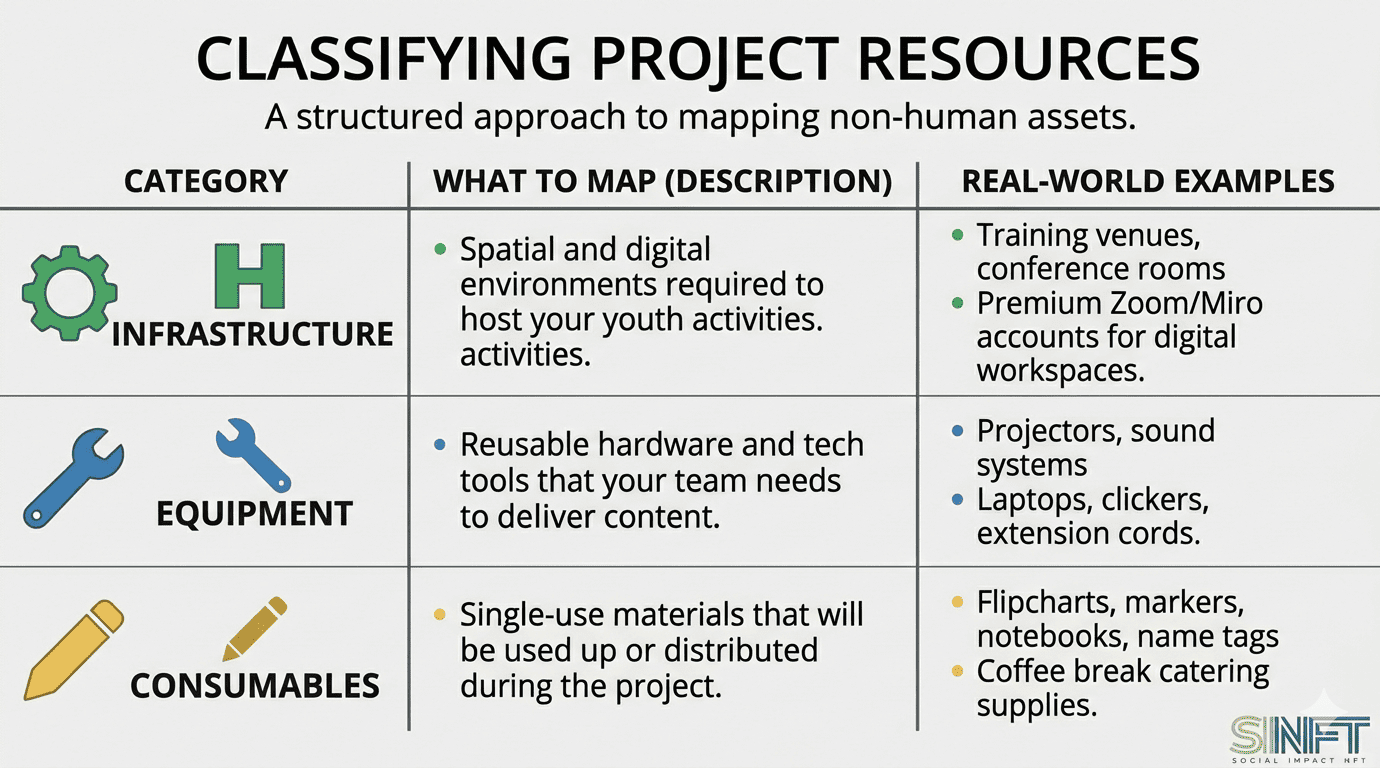
2. Resource Mapping: Physical Assets
Before you start writing down numbers and prices in your budget, you must first understand exactly what physical objects your project requires to exist. Look at your Work Breakdown Structure (WBS) and categorize your non-human assets into three distinct buckets:
Next Steps
Now that you know how to anchor your tasks in time and resources, scroll down to complete your combined Toolkit Assignment and lock these dates and assets into your official My First Project Canvas!

Shape the Future.
Mint the Change.