
Project Planning & Responsibility
📝 Video 3.2 Summary: The Work Breakdown Structure (WBS)
A major mistake beginner project coordinators make is trying to manage a project as one single, massive event. To execute successfully without burning out your team, you must use a Work Breakdown Structure (WBS). This framework deconstructs your high-level SMART objectives into small, manageable, and highly actionable tasks called Work Packages.
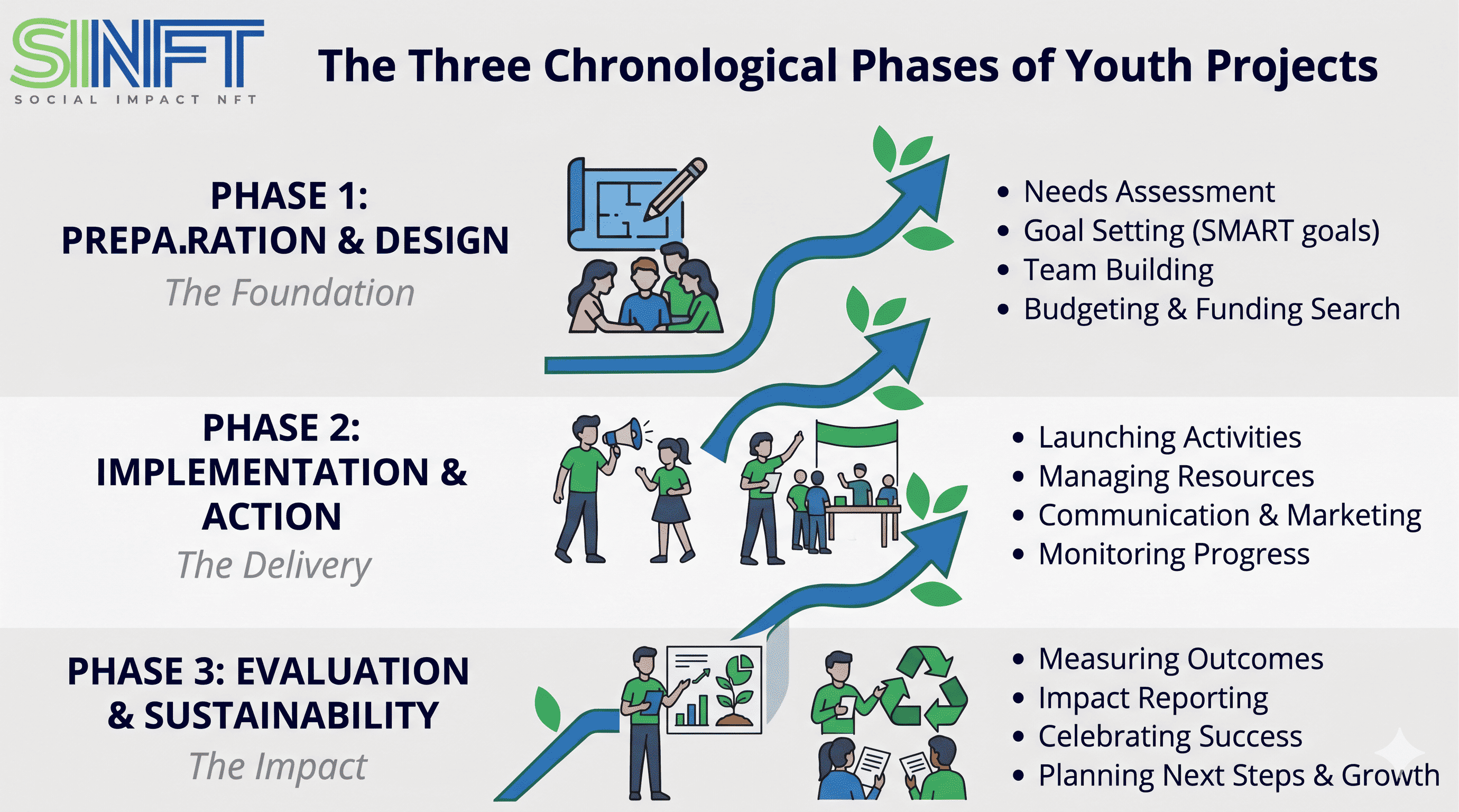
The Three Chronological Phases of Youth Projects
To ensure absolutely nothing slips through the cracks, a professional coordinator divides all project tasks into three distinct phases:
-
The Preparation Phase (Pre-Project):
-
What it is: Everything that must be completed behind the scenes before your project officially begins or your launch date arrives.
-
Examples: Securing local catering, printing materials, launching social media ads, and creating application forms.
-
-
The Implementation Phase (Project Day):
-
What it is: The live execution of your initiative where your core activities take place.
-
Examples: Registering participants at the door, coordinating speaker timelines, managing the tech/AV setup, and documenting the event with photos.
-
-
The Follow-Up Phase (Post-Project):
-
What it is: The essential closing steps that secure your project's long-term sustainability, accountability, and relationships.
-
Examples: Sending evaluation surveys, cleaning the venue, sending thank-you emails to partners, and finalizing your narrative/financial reports.
-

Shape the Future.
Mint the Change.