
Project Planning & Responsibility
📝 Video 2 Summary: The 4 Phases of the Project Lifecycle
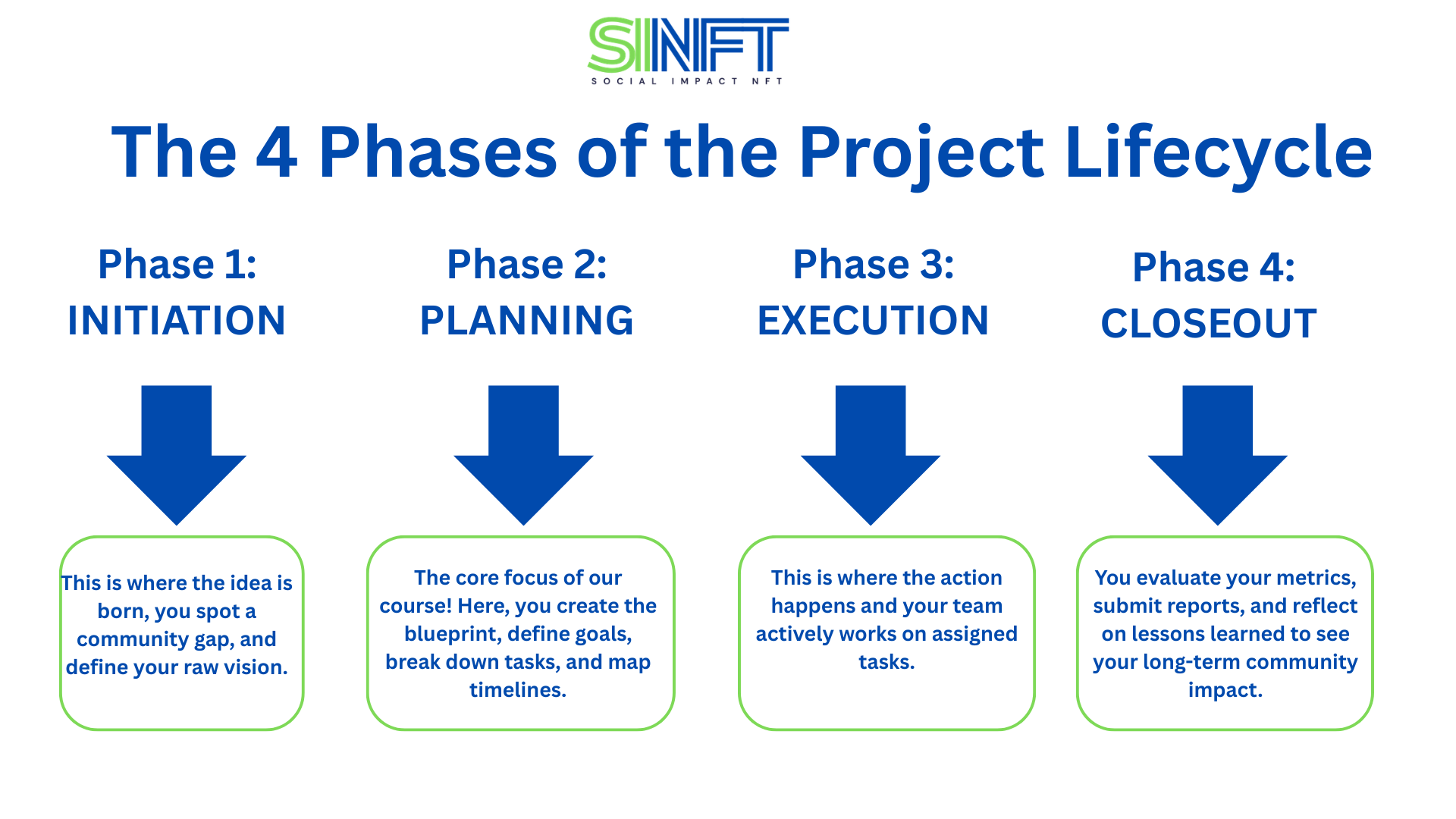
While every project is unique in its goals—whether you are creating a local community youth space, managing an Erasmus+ international exchange, or launching a cutting-edge Social Impact NFT campaign—the structural journey remains identical. In project management, this journey is strictly defined as the Project Lifecycle, a sequence of four overarching phases that guide an idea from concept to completion.
Understanding these phases is critical for a coordinator. It ensures that you spend your resources at the right time and never skip crucial ethical or analytical steps.
The 4 Phases in Detail
Phase 1: INITIATION (The Vision & Feasibility)
-
The Core Focus: Identifying a true community gap and validating the initial idea.
-
What Happens Here: This is where the spark begins. You map out your target audience, research their exact challenges, and define the macro-level "Why" behind your initiative. Before you write a single task, you must answer the baseline question: Is this project actually feasible and necessary for my community?
-
Key Outcome: A rough conceptual framework (like the Project Canvas you will use in this course).
Phase 2: PLANNING (The Roadmap & Blueprint)
-
The Core Focus: Building the step-by-step master plan. (The primary focus of this entire course!)
-
What Happens Here: Passion is translated into pure logic. In this phase, you establish laser-focused SMART goals, break down massive tasks into small pieces (Work Breakdown Structure), build your calendar timeline, assign precise responsibilities, and analyze potential operational risks.
-
Key Outcome: A finalized, shared planning document that serves as the team's guide.
Phase 3: EXECUTION (The Action & Management)
-
The Core Focus: Launching the initiative and tracking daily progress.
-
What Happens Here: The blueprint is put into drive. Your team actively works on their assigned responsibilities. As a project coordinator, your main job shifts to keeping communication clear, ensuring everyone meets their deadlines, and resolving unexpected hurdles as they pop up.
-
Key Outcome: The physical delivery of your project (e.g., holding the workshop, launching the platform, or completing the campaign).
Phase 4: CLOSEOUT & REFLECTION (The Impact & Transparency)
-
The Core Focus: Evaluating metrics, practicing transparency, and reflecting on long-term sustainability.
-
What Happens Here: A responsible project never just "stops" when the event ends. You gather your data to evaluate your metrics, submit transparent financial and operational reports to your stakeholders, and hold a structured reflection session with your team to review what went right, what went wrong, and what impact you left behind.
-
Key Outcome: A final evaluation report and an empowered, cohesive team ready for the next project.

Shape the Future.
Mint the Change.