
Branding, Content and Ethics
Keeping the cause central
Keeping the Cause Central, Not Just the Selling
For Social Impact NFTs, the NFT itself is not the final goal — it is a tool that supports awareness, inclusion, community action, fundraising, education, or positive social change.
Many digital campaigns fail ethically when marketing becomes too focused on sales, hype, scarcity, or profit while the actual mission becomes secondary. Purpose-driven marketing requires creators to consistently communicate why the project exists, who it helps, and what impact it creates.
With this lesson you will :
1. Understand the difference between cause-centered and sales-centered marketing
2. Recognize when a campaign shifts too much focus toward selling
3. Create marketing messages that prioritize social impact
4. Balance promotion with authenticity and transparency
5. Develop campaigns that build trust and long-term community engagement
Why This Matters
In traditional marketing, success is often measured only through sales numbers, clicks, and profit.
In social impact NFT projects, success should also include:
- Community engagement
- Awareness raised
- Social value created
- Inclusivity and participation
- Real-world outcomes and positive change
If audiences feel that a project is using a social cause only as a marketing strategy, trust can quickly disappear. Ethical marketing means ensuring that the cause is visible not only during launch campaigns, but throughout the entire project journey.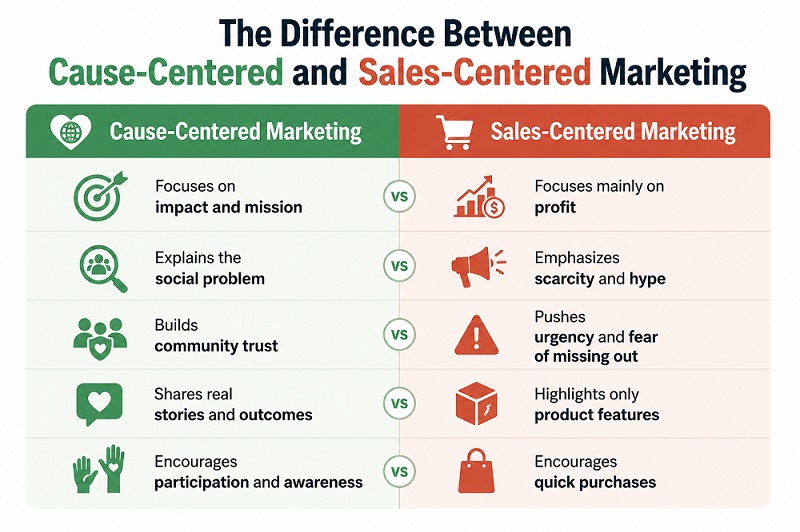

Shape the Future.
Mint the Change.